Quick Facts
- Fare: $20 Adults, $15 Children (2-12), $10 Seniors (62+)
- Duration: 2-hour narrated round trip
- Schedule: Wednesday at 1 PM; Saturday at 12 PM and 3 PM; Sunday at 1 PM and 3 PM
- Booking: Mandatory reservations at least 2 weeks in advance via phone
- Key Highlight: Scenic ice cream stop at Ko Olina (excludes Sunday 1 PM tour)
- Location: Ewa Train Depot, 91-1001 Renton Road, Ewa Beach
- Payment: Cash preferred for tickets; some onsite facilities are cash-only
Experience the 'slow travel' side of the island with historic Hawaii train rides that depart from the Ewa Train Depot. The Hawaiian Railway Society offers the premier Hawaii train rides experience on Oahu, featuring a two-hour narrated tour along 6.5 miles of track. This historic Oahu train tour is the island's only operating heritage railroad and serves as a living museum of the plantation era.
To understand the modern landscape of Oahu, one must first look at the narrow-gauge steel rails that once stitched the island's sugar plantations to its bustling harbors. Long before the H-1 freeway defined the rhythm of West Oahu, the island moved to the measured chug of steam and diesel. Today, that legacy is preserved not just in history books, but through the dedicated efforts of the Hawaiian Railway Society.
For travelers looking to escape the high-velocity tourism of Waikiki, this journey offers a sophisticated alternative. Traveling at a top speed of just 15 miles per hour, this experience prioritizes historical context and geographic exploration over adrenaline. It is a chance to see the Leeward coast as it once was, framed by the Waianae mountain range and the vast blue of the Pacific.
The Legacy of Benjamin Dillingham and the OR&L
The story of rail on Oahu is inextricably linked to the vision of one man: Benjamin Dillingham. A former sailor who found himself stranded in the islands after a fall from a horse, Dillingham saw potential where others saw only dusty plains. In 1889, he founded the Oahu Railway and Land Company (OR&L) to facilitate the industrial transport legacy of the island’s burgeoning sugar industry.
The impact was immediate and massive. On its official opening day of November 16, 1889, the Oahu Railway and Land Company provided free transportation to more than 4,000 passengers on its initial 12-mile stretch between Honolulu and the Pearl River Lagoon. This was more than just a novelty; it was the backbone of Hawaii’s economic transformation. The railroad allowed sugar plantations to move their harvests efficiently to the coast, fundamentally changing the island's infrastructure.
Throughout the early 20th century, the OR&L expanded its reach, circumnavigating the northern tip of the island. However, it was during the height of the Pacific theater that the railway truly proved its worth. At its operational peak during World War II, the Oahu Railway and Land Company transported nearly two million passengers across its network during the 1944 and 1945 period. Troops, supplies, and sugar workers all relied on these narrow tracks.
When the plantation era eventually faded and trucks replaced trains, the tracks fell into disrepair. It was only through the non-profit Hawaiian Railway Society that a significant portion of the line was saved. Today, the society maintains a stretch of track that is officially listed on the National Register of Historic Sites, ensuring that the heritage railroad preservation of this era continues for future generations.
What to Expect: The 2-Hour Leeward Coast Journey
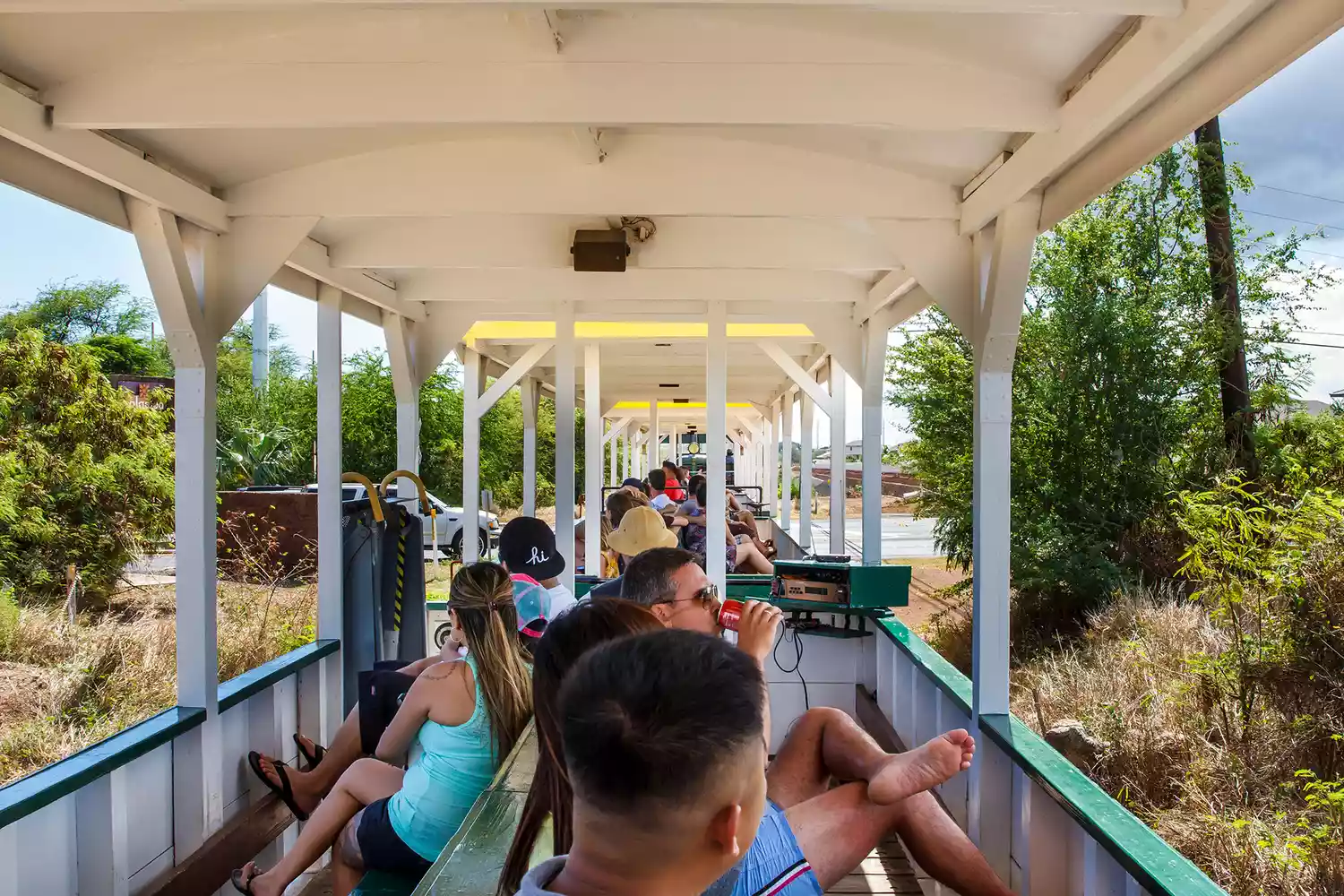
Boarding the train at the Ewa Train Depot feels like a deliberate step back in time. There are no air-conditioned coaches or sleek modern amenities here. Instead, passengers sit in open-air passenger cars, designed to let the island breeze flow through as the landscape unfolds. This is slow travel at its finest, where the narrative of the guide is as important as the view out the window.
The tour begins by winding through residential areas and industrial zones that hint at the island’s mid-century growth. As the train clears the outskirts of Ewa, the Leeward coast scenery takes center stage. To the right, the Waianae mountain range rises sharply against the sky, its deep ridges and valleys providing a dramatic backdrop to the sugar plantation history of the region.
Key highlights of the 6.5-mile journey include:
- Kahe Point Overlook: The train pauses at this dramatic vantage point, often called Electric Beach by locals. From the elevated track, you can see the turquoise waters of the Pacific and, during the winter months, occasionally spot the spout of a humpback whale.
- Ko Olina Stop: Except for the Sunday 1 PM run, the train makes a scheduled stop at the luxury resort area of Ko Olina. Here, the pace remains leisurely as passengers disembark for a 15-minute ice cream layover at a local shop near the tracks. It is a quintessential Hawaiian experience—enjoying a cold treat while leaning against a vintage rail car.
- Narrated History: Throughout the ride, volunteer guides share anecdotes about Benjamin Dillingham, the engineering challenges of the narrow-gauge track, and the daily lives of the plantation workers who once rode these same rails.
The Hawaiian Railway Society currently manages the only active historic railway on Oahu, operating narrated educational excursions along a 6.5-mile restored section of the original narrow-gauge trackbed. The rhythmic click-clack of the wheels provides a meditative contrast to the typical island traffic, encouraging a deeper appreciation for the geographic exploration of the Leeward side.
Rolling Stock: Diesel Locomotives and Royal Carriages
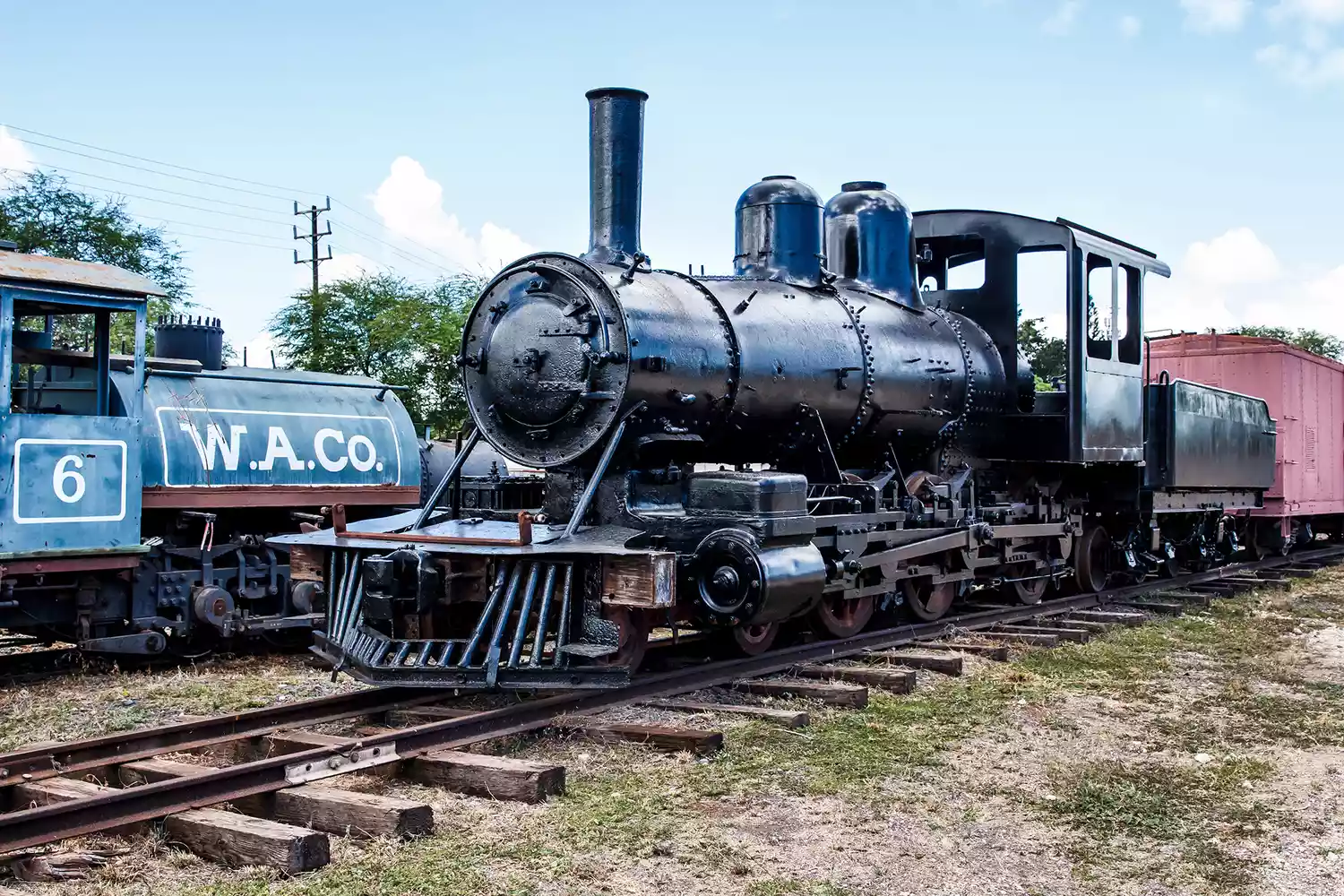
For the rail enthusiast, the society’s collection of antique rolling stock is the main event. While the steam engines of the plantation era are largely for display now, the working fleet consists of beautifully maintained vintage diesel locomotives.
The workhorses of the current operation are the GE 45 tonners. These rugged, compact engines were designed for industrial use and are perfectly suited for the narrow-gauge tracks of the Ewa line. They represent a transition period in Hawaii’s industrial transport legacy, moving away from the high-maintenance steam engines to more reliable diesel power.
However, the jewel of the collection is undeniably the Dillingham parlor car—officially known as Parlor Car 64. Built in 1900 specifically for Benjamin Dillingham, this carriage was the height of luxury at the turn of the century. It features fine wood paneling, plush seating, and an observation platform that hosted royalty and dignitaries. While it is only brought out for special occasions and select tours, its presence at the depot is a testament to the sophistication that once graced the Hawaiian rails.
The preservation yard at Ewa also houses a variety of other cars, including:
- The "Sugar" Cars: Small, flatbed cars once used to carry chopped cane from the fields to the mills.
- Boxcars and Tankers: Remnants of the logistical network that kept the island running during the early 20th century.
- Military Speeders: Small motorized vehicles used during the war to inspect the tracks for sabotage or damage.
Planning Your Visit to the Ewa Train Depot Museum
A visit to the Hawaiian Railway Society is more than just a train ride; it is a full immersion into the island's mechanical history. To make the most of your trip, it is essential to plan ahead, as this is one of the most popular historic Oahu train tour options on the island.
The adventure begins at the Ewa Train Depot museum. This site serves as a hub for local history, featuring old rail equipment and a fascinating Toy Train Museum that is free to the public. For those traveling with young children, this is often considered the best Hawaii train rides for families with kids because it allows for exploration before and after the 2-hour tour.
Pro-Tip: Booking and Logistics
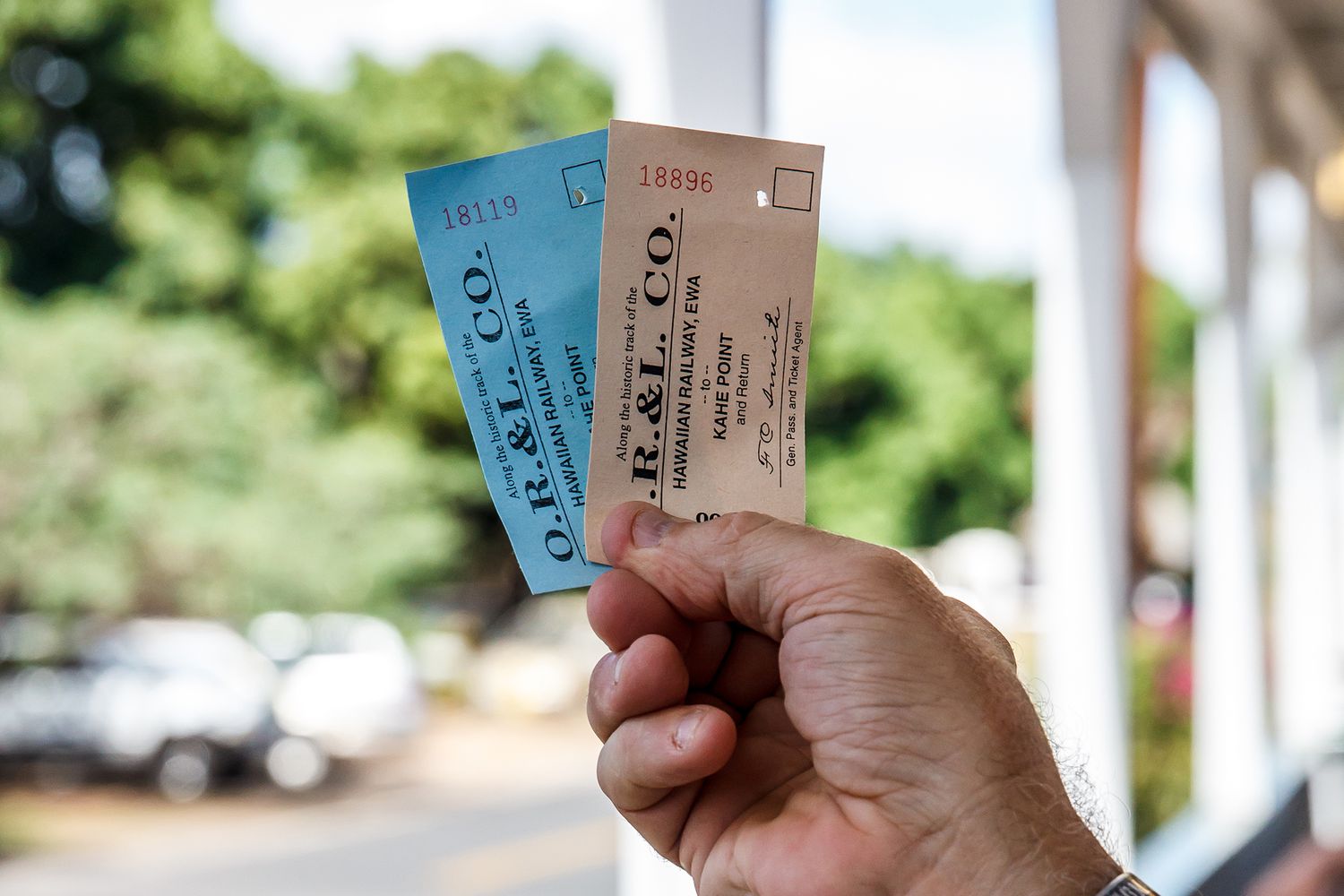
- Reservations: You cannot walk onto these trains. You must book your Hawaiian Railway Society ticket prices and booking tips by calling the depot directly at least two weeks in advance. During the summer or holiday seasons, three to four weeks is even safer.
- Cash is King: While some modern upgrades have arrived, the depot is largely a cash-preferred operation. Bring enough for your tickets, the gift shop, and the ice cream stop at Ko Olina.
- Arrival Time: Arrive at least 30 minutes before your scheduled departure. This gives you time to browse the outdoor museum and secure a good seat in the open-air passenger cars.
| Ticket Type | Price |
|---|---|
| Adults | $20 |
| Seniors (62+) | $10 |
| Children (2-12) | $15 |
| Infants (Under 2) | Free |
Visiting the Ewa train depot museum on Oahu offers a rare look at the "West Side" that many tourists overlook. The staff and guides are almost all volunteers who possess a wealth of knowledge about the locomotives and the land they traverse. Their passion for heritage railroad preservation is what keeps the wheels turning.
FAQ
Are there passenger trains in Hawaii?
While Hawaii does not have a statewide passenger rail network like the mainland's Amtrak, there are several historic and recreational passenger trains. The most prominent is the Hawaiian Railway Society on Oahu, which operates a 6.5-mile historic Oahu train tour. There are also agricultural-themed train rides on other islands, such as the Kauai Plantation Railway and the Maui Tropical Plantation.
Where can you go on a train ride in Hawaii?
On Oahu, you can depart from the Ewa Train Depot for a journey along the Leeward coast to Kahe Point and Ko Olina. On Kauai, you can find train rides at Kilohana Plantation that explore fruit orchards and tropical forests. Each experience focuses on the unique agricultural and industrial history of its respective island.
How much does a Hawaii train tour cost?
For the historic Hawaii train rides on Oahu, tickets are generally $20 for adults and $15 for children, with a discounted $10 rate for seniors over 62. Prices may vary slightly for special holiday-themed events like the Candy Cane Express or the Halloween trains.
Is there a train system on Oahu?
Oahu currently has two distinct rail systems. The first is the historic narrow-gauge railway operated by the Hawaiian Railway Society for tourism and education. The second is Skyline, the island's modern, rapid-transit commuter rail system. While Skyline is designed for transit, the historic railway is designed for sightseeing and historical appreciation.
Are Hawaii train rides suitable for kids?
Yes, they are exceptionally well-suited for families. The 2-hour tour is long enough to be an adventure but short enough to keep children engaged, especially with the scheduled ice cream stop at Ko Olina. The open-air passenger cars and the Toy Train Museum at the depot make it one of the best Hawaii train rides for families with kids.
Do you need to buy train tickets in advance in Hawaii?
Absolutely. Due to limited seating and scheduled operation times, you must make a reservation. For the Hawaiian Railway Society, it is highly recommended to call at least two weeks in advance. Walk-ins are rarely accommodated as tours typically sell out well ahead of time.