Quick Facts
- Location: Linton Bay Marina, Puerto Lindo, Panama
- Eco-Innovation: Active coral reef restoration through solar-powered calcium carbonate accretion
- Price Range: $295,000 for the flagship model up to $1.5 million for custom builds
- Living Space: 833 square feet spanning three vertical levels
- Logistics: Autonomous drone delivery and surface vessels supporting up to 440 pounds
- Residency: Investment qualifies for the Panama Residence by Investment Program
- Connectivity: Factory-integrated Starlink for high-speed remote work in the blue economy
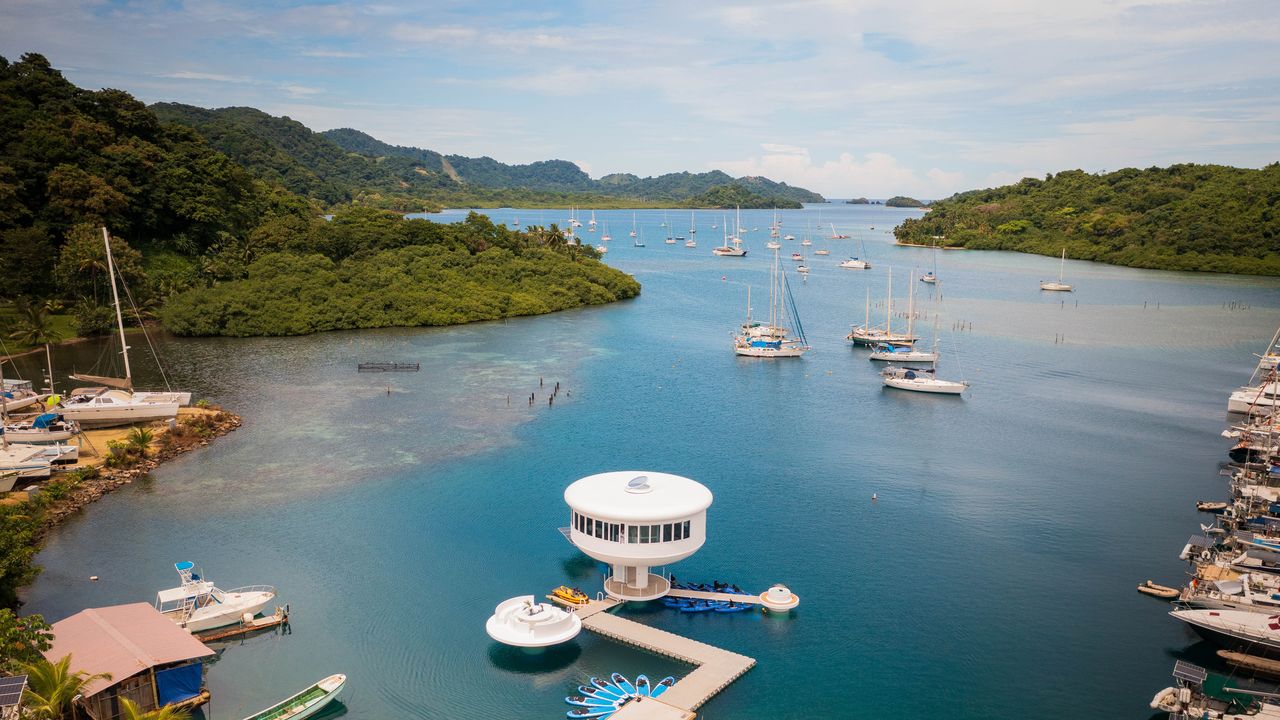
The future of ocean living has arrived at Linton Bay Marina. The Panama SeaPod is more than a luxury floating home; it is a piece of eco-restorative marine technology designed to heal the ocean while providing a high-tech lifestyle. Unlike traditional structures, these innovations represent the next evolution in aquatic architecture.
The Restorative Revolution: More Than Just Sustainable
For decades, the dream of the overwater bungalow has come with a heavy environmental price tag. Traditional sustainable overwater bungalows Panama offers often rely on permanent concrete or wooden pillars driven deep into the seafloor. This process destroys delicate seagrasses and disrupts the natural flow of sediment. As a travel editor focused on responsible tourism, I have often questioned if the aesthetic beauty of these stays is worth the ecological footprint.
The Panama SeaPod changes this conversation entirely. Built by Ocean Builders, these homes operate on the principle of restoration rather than just preservation. Instead of damaging the ocean floor, the SeaPod is tethered by a series of anchors that minimize contact with the seabed. But the real magic happens beneath the surface through a process known as calcium carbonate accretion.
By passing a safe, low-voltage solar-powered electrical current through the submerged steel tubes, the structure attracts minerals from the seawater. Over time, these minerals form a hard layer of calcium carbonate, essentially creating a self-healing limestone coating. This attracts polyps and fish, transforming the base of the home into a regenerative artificial reef. This is a prime example of how SeaPod eco-restorative technology helps coral reefs by providing a sturdy, nutrient-rich foundation for marine biodiversity to thrive in areas where natural reefs may be struggling.
| Feature | Traditional Overwater Bungalows | Panama SeaPod Floating Homes |
|---|---|---|
| Foundation Type | Permanent pillars driven into the seafloor | Moored anchors with minimal seabed footprint |
| Ecological Impact | Habitat destruction and sediment disruption | Active reef growth via mineral accretion |
| Mobility | Stationary and permanent | Can be relocated or towed to new locations |
| Sea Level Rise | Fixed height; vulnerable to rising tides | Floating design; naturally adjusts with tides |
| Marine Life | Often displaces local fish populations | Acts as a nursery for local marine biodiversity |
The involvement of the Smithsonian Tropical Research Institute further validates this approach. By monitoring the types of life that congregate around these pods, Ocean Builders is proving that luxury floating home innovations can act as vital tools for scientific research and environmental repair.
Engineering Stability: Floating 7.5 Feet Above the Waves
One of the most common questions travelers ask when they see the vertical, tripod-like design of the pod is whether they will feel seasick. The engineering behind the Panama SeaPod addresses this through a proprietary system known as 9-axis StabilityPro. This advanced motion monitoring helps the structure stay level even when the surrounding waters are in motion.
Ocean Builders engineered the SeaPod to remain stable in wave heights of up to 5 meters while floating approximately 7.5 feet above the water surface. This elevation is not just for the view; it provides a crucial buffer against the energy of the ocean, ensuring that the living quarters remain dry and calm. For those concerned about safety, SeaPod hurricane safety and engineering for floating homes is a major topic of discussion. While the pods are incredibly robust, their location in Panama is a strategic advantage, as the country sits largely below the traditional hurricane belt, providing a safer environment for year-round aquatic living.
The modular construction of the pod involves 3D-printed steel and composite materials, allowing for a sleek, futuristic aesthetic that looks like something out of a science fiction film. Yet, the interior feels warm and grounded. The 833 square feet of living space is distributed across three floors, utilizing every inch of the curved walls to create a functional, minimalist environment that emphasizes the panoramic ocean views.
A New Way of Life: Drones, AI, and Starlink
Living in a Panama SeaPod is an entry into the blue economy—a lifestyle where the ocean is not just a backdrop, but the foundation of daily life. The transition to this off-grid existence is made seamless through the integration of cutting-edge technology.
Cora AI and Smart Monitoring
Every pod is equipped with a digital nervous system. Over 100 sensors monitor everything from water consumption and humidity to wind speed and electrical output. This data is managed by an AI system named Cora. Residents can control their entire home via a wearable smart ring or voice commands, adjusting lighting, temperature, and even the transparency of the windows to suit their mood. This level of automation ensures that resources like solar power and harvested rainwater are used with maximum efficiency, aligning with the core values of eco-conscious voyagers.
Drone Logistics and Connectivity
The challenge of living at sea has always been logistics—how do you get groceries, medicine, or spare parts when you are miles from a store? Ocean Builders has solved this by creating a dedicated fleet of autonomous vehicles. The floating community utilizes aerial delivery drones and autonomous surface vessels capable of transporting up to 440 pounds to deliver supplies directly to residents.
For the modern digital nomad, living in a SeaPod drone delivery and smart home features are complemented by factory-integrated Starlink connectivity. This ensures that even while floating in the middle of a Caribbean bay, you have the high-speed internet required for global communication. It represents a paradigm shift for high-end travelers who want to escape the city without sacrificing their professional productivity.
Investment and Residency: Owning a SeaPod
While many will visit these pods via short-term stays at Linton Bay Marina, there is a growing interest in full-time residency. The Panama SeaPod flagship model offers 833 square feet of living space across three floors with unit prices ranging from $295,000 to $1.5 million depending on the level of customization.
Beyond the physical property, purchasing a pod offers significant legal benefits. Understanding the Panama SeaPod cost and residency investment guide is essential for international buyers. Because the SeaPod is considered a real estate investment, it can qualify buyers for the Panama Residence by Investment Program. This provides a direct path to legal residency in one of the most stable and tax-friendly countries in Latin America.
Ocean Builders is already looking beyond the borders of Panama. Plans are underway to bring these eco-restorative marine technology habitats to the Maldives, Dubai, and even the Florida coast. By creating a scalable, modular model, they are paving the way for a global network of floating communities that help heal the oceans as they expand.
FAQ
What is a Panama SeaPod?
The Panama SeaPod is a revolutionary floating home designed by Ocean Builders. It is a vertical, three-story residence elevated above the water that uses eco-restorative technology to support marine life while providing a high-tech, off-grid lifestyle for its residents.
How much does it cost to buy a SeaPod in Panama?
The cost of a SeaPod generally ranges from $295,000 for the standard flagship model to $1.5 million for a fully customized luxury version. The price varies based on interior finishes, technological upgrades, and the specific model chosen.
Where in Panama are the SeaPods located?
The initial SeaPods are located at Linton Bay Marina in Puerto Lindo, on the Caribbean coast of Panama. This location offers a protected environment with access to some of the country's most beautiful coral reefs and islands.
Can you live in a SeaPod full-time?
Yes, the SeaPod is designed for permanent, full-time living. It features all the amenities of a traditional land-based home, including a kitchen, master bedroom, bathroom, and living area, supported by smart home technology, solar power, and autonomous delivery systems for essentials.
Are SeaPods resistant to hurricanes and storms?
The SeaPod is engineered for high stability and can withstand wave heights of up to 5 meters. Its location in Panama is strategically chosen as it is outside the main hurricane belt, though the pods are built to be robust enough for various maritime weather conditions.
Are SeaPods environmentally friendly?
SeaPods go beyond being just eco-friendly; they are eco-restorative. They use an electrical accretion process to grow artificial coral reefs on their foundations, helping to restore local marine biodiversity. They also utilize solar energy and rainwater harvesting to minimize their environmental impact.