Quick Facts
- Top Locations: Lindblad Expeditions' National Geographic Endurance & Resolution
- Pricing: Often included in the cruise fare (first-come, first-served)
- Optimal Window: September for sea-based Northern Lights
- Material: Polycarbonate or heated glass geodesic domes
- Key Amenities: Fleece-lined robes and hot water bottles
- Key Challenges: No en-suite bathrooms or electrical outlets
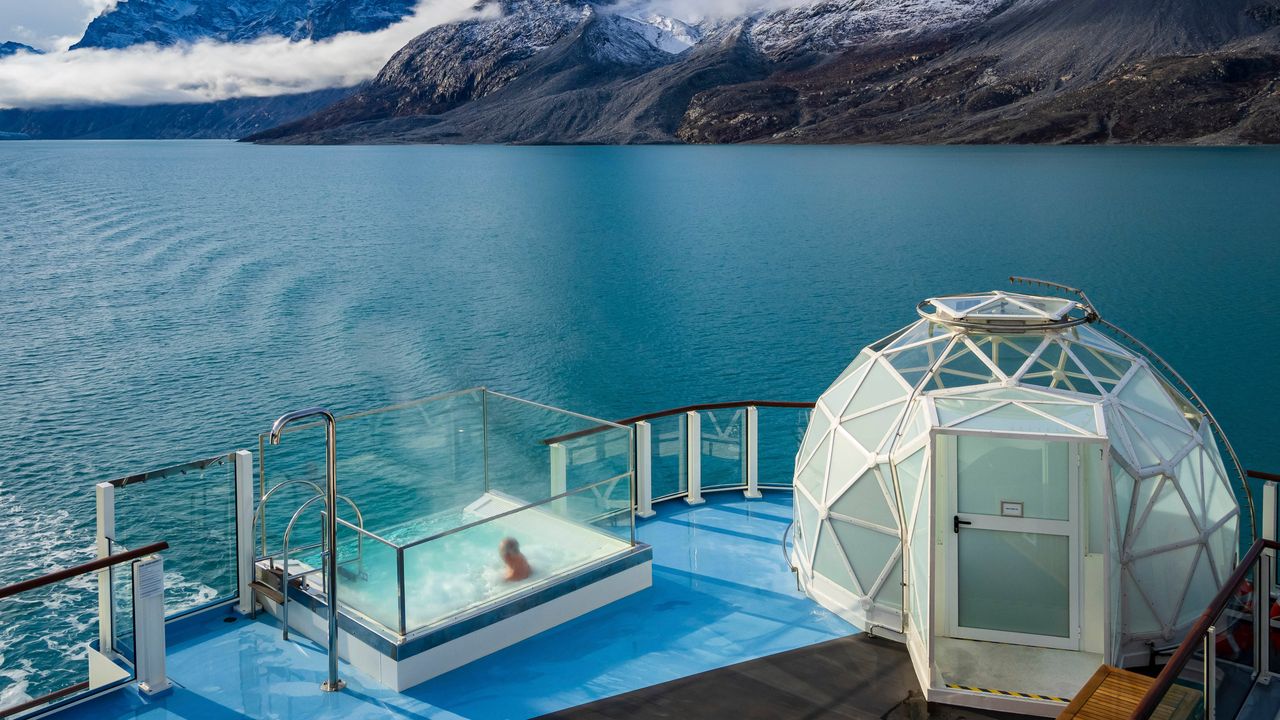
A glass igloo cruise offers a rare chance to sleep in geodesic domes atop expedition ships like the National Geographic Endurance, providing an unobstructed view of the Arctic sky from your bed. These stays are often managed on a first-come, first-served basis once onboard, offering high-end insulation and panoramic views for an unforgettable maritime adventure under the stars.
Sleeping in a glass igloo on an Arctic expedition cruise provides a panoramic view of the polar landscape and night sky directly from your bed. On ships like the National Geographic Endurance, these geodesic domes are situated on the top deck for unobstructed stargazing. While the pods are unpowered to maintain a dark-sky environment, they provide high-quality duvets and thermal insulation to keep guests warm in freezing temperatures.
The Reality of Sleeping in a Glass Igloo on Deck
Stepping out onto the observation deck of a polar expedition vessel at midnight is usually a bracing experience of wind and sub-zero temperatures. However, the introduction of a glass igloo cruise experience transforms this into a luxury adventurous retreat. Unlike traditional cabins, these domes are perched at the highest point of the ship, often near the bridge or the stern, where the horizon feels infinite. From this vantage point, you aren't just watching the scenery pass by; you are suspended within it.
The architecture of these domes, typically a geodesic dome design made from high-strength polycarbonate, serves a dual purpose. It provides a crystal-clear lens into the Arctic wilderness while maintaining structural integrity against the maritime elements. During the day, you might find yourself drifting past towering glaciers or watching the sun hover near the horizon during the magic hour—a period that lasts far longer in these latitudes than anywhere else on Earth.
At night, the focus shifts toward dark sky tourism. Because the ship moves away from coastal light pollution, the obsidian sky becomes a canvas for the stars and, if you are lucky, the Aurora Borealis. The insulation within these pods is remarkably effective. Even as the external temperature drops well below freezing, the combination of thermal insulation and high-loft duvets ensures a cozy environment. It is a surreal feeling to lie back and watch the mast of the ship sway gently against a backdrop of a thousand shifting stars.
Amenities and Survival: What’s Inside the Dome?
When discussing expedition cruise igloo amenities, it is important to distinguish between luxury and literalism. These are not hotel suites; they are immersion capsules. To protect the integrity of the stargazing experience, the pods are deliberately unpowered. This means there are no bright LED clocks, no television screens, and no electrical outlets to charge your phone. The goal is to eliminate light bleed that would otherwise obscure your view of the celestial dance outside.
Inside, you will typically find:
- Fleece-lined robes and capes: Designed for the quick transition from your warm bed to the outdoor deck if a sudden Aurora flare-up occurs.
- Hot water bottles: Added as a nostalgic and highly effective layer of warmth beneath the heavy duvets.
- Color-changing mood lighting: Battery-operated or low-voltage systems that allow you to set a faint red or green glow, which helps preserve your night vision.
- Frosted privacy glass: Usually applied to the lower third of the dome to ensure privacy from other passengers walking the observation deck.
The logistical challenge often surprises travelers: the lack of en-suite bathrooms. Staying in an Arctic cruise glass igloo involves a certain "mad dash" across the deck to the ship’s interior spa or gym facilities if nature calls in the middle of the night. It is part of the adventure, though perhaps less romantic when the Arctic wind is blowing at thirty knots. Furthermore, the question of are cruise ship glass igloos warm in winter is answered by the quality of the bedding. While the air inside the dome may be crisp, your sleeping environment is engineered for total warmth.
If you are wondering what to pack for sleeping in a glass igloo on a ship, think in layers. Moisture-wicking base layers are essential, as is a warm hat. Even with the best insulation, your head is the part of you most exposed to the cooler ambient air inside the dome.
Cruise Igloos vs. Land-Based Stays: Which is Better?
Travelers often debate between a glass igloo cruise vs land based northern lights stay. On land, iconic resorts in Ivalo or Rovaniemi offer more technical comfort, often including heated glass that melts snow and private bathrooms. However, the ship offers a distinct advantage: mobility. While a land-based resort is fixed in one location, a luxury expedition ship can navigate toward clearings in the cloud cover, significantly increasing your chances of a successful sighting.
| Feature | Glass Igloo Cruise | Land-Based Igloo (Lapland) |
|---|---|---|
| Mobility | High (Ship moves to clear skies) | Fixed Location |
| Probability | Enhanced by navigation | Dependent on regional weather |
| Connectivity | None in-dome (Dark sky focus) | Full Wi-Fi and power |
| Scenery | Passing glaciers and sea ice | Boreal forests and snowdrifts |
| Availability | Extremely limited (2-4 per ship) | Higher capacity resorts |
For those staying in Finnish Lapland during the peak season for at least three nights, there is a 75% for seeing the Northern Lights at least once. This is a strong statistic, but sea-based travelers benefit from the fact that the Aurora Borealis is visible in the region for approx 8 months out of the year, from late August to April. In specific high-latitude ports like Kilpisjärvi, the lights appear on approx 75% of clear nights, and being on a ship allows you to find those clear patches of sky that land-bound tourists might miss.
The "fail-safe" value is also higher on a ship. Even if the clouds refuse to part, waking up to the dawn light reflecting off the icebergs of Scoresby Sund provides a visual storytelling moment that a snowy forest cannot always match.
Planning Your Experience: Timing and Booking
Booking this experience requires both foresight and a bit of luck. On vessels like the National Geographic Endurance, the glass igloos are not something you can typically book as your primary cabin for the entire voyage. Instead, they are an overnight "addon" experience.
To secure your night, you must know how to book a glass igloo cruise experience effectively. These are almost always handled on a first-come, first-served basis once you are physically onboard. The most seasoned travelers head straight to the ship’s reception or the expedition desk the moment they board to put their name on the list.
The best months for arctic cruise glass igloo viewing are undoubtedly September and March. September is the "sweet spot" because it marks the return of the dark nights required for Aurora viewing, but the sea ice is still navigable, allowing the ship to reach deep into fjords. March offers that classic "Blue Hour" light that photographers crave, combined with higher thermal stability. A 6-12 month booking lead time for the cruise itself is highly recommended, as polar expedition cabins sell out long before the departure date.
Photography Tips for Glass Domes
As a visual editor, the photography aspect of a glass igloo cruise is both the most rewarding and the most challenging. Shooting through polycarbonate or glass panels presents unique hurdles, primarily reflections and condensation.
Pro Tip: Use a flexible rubber lens hood. This allows you to press your camera lens directly against the glass of the dome, sealing out the internal mood lighting and preventing ghosting reflections on your sensor.
For successful celestial photography, you need to manage the ship’s movement. Long exposures (anything over 2-5 seconds) will often appear blurry due to the engine vibrations and the swell of the ocean. To counteract this, use a "fast" lens with a wide aperture (f/2.8 or better) and push your ISO higher than you normally would on land. This allows for shorter shutter speeds that "freeze" the Aurora while maintaining a sharp horizon.
Ventilation is another factor. In a small, enclosed space like a geodesic dome, your breath can quickly create condensation on the cold glass. Most domes feature small ventilation portholes or fans. Ensure these are active to keep the air moving, or you’ll find your view of the stars becoming a soft-focus blur within the first hour.
FAQ
What is a glass igloo cruise?
A glass igloo cruise is a luxury expedition voyage where the ship is equipped with transparent geodesic domes on the top decks. These pods allow guests to spend a night sleeping under the stars and the Northern Lights while being protected from the Arctic elements, offering 360-degree panoramic views of the polar landscape.
Can you see the Northern Lights on a glass igloo cruise?
Yes, and being on a ship often increases your chances compared to being on land. Ships can navigate around localized cloud cover to find clear skies. During the peak viewing season from September to March, the probability of seeing the Aurora from the observation deck is very high during clear nights.
Are glass igloo cabins on cruises warm?
While the domes themselves are not usually heated by a central furnace to prevent ice melting and condensation, they are equipped with heavy-duty thermal insulation and high-quality Arctic-grade bedding. Guests are also provided with hot water bottles and fleece-lined robes to ensure they stay warm in freezing temperatures.
How do glass igloo cruises compare to traditional land-based igloo stays?
Land-based stays, such as those in Finnish Lapland, often offer more space, en-suite bathrooms, and electricity. However, cruise-based igloos offer the unique advantage of maritime mobility to find clear weather and the specific visual beauty of sea ice and glaciers, which are not visible from inland resorts.
What is the best time of year for a glass igloo cruise?
The best time is during the transition seasons of late August through September and the month of March. These periods offer the necessary darkness for Northern Lights viewing while the sea ice conditions still allow for high-latitude navigation into scenic fjords and coastal areas.