Quick Facts
- Market Status: Recognized globally as the Nantucket Birkin for its exclusivity and investment value.
- Labor Intensity: A single 8-inch round basket requires an average of 40 hours of meticulous craftsmanship to complete.
- Valuation Range: Prices typically span from $500 for contemporary pieces to a record auction price of $118,000.
- Historical Origins: Developed by crew members aboard the South Shoal Lightship during the 19th-century whaling era.
- Signature Materials: Hand-woven using rattan staves and cane over specialized wooden molds with solid wooden bases.
- Key Innovation: Transformed into a high-fashion handbag in 1948 by weaver José Formoso Reyes.
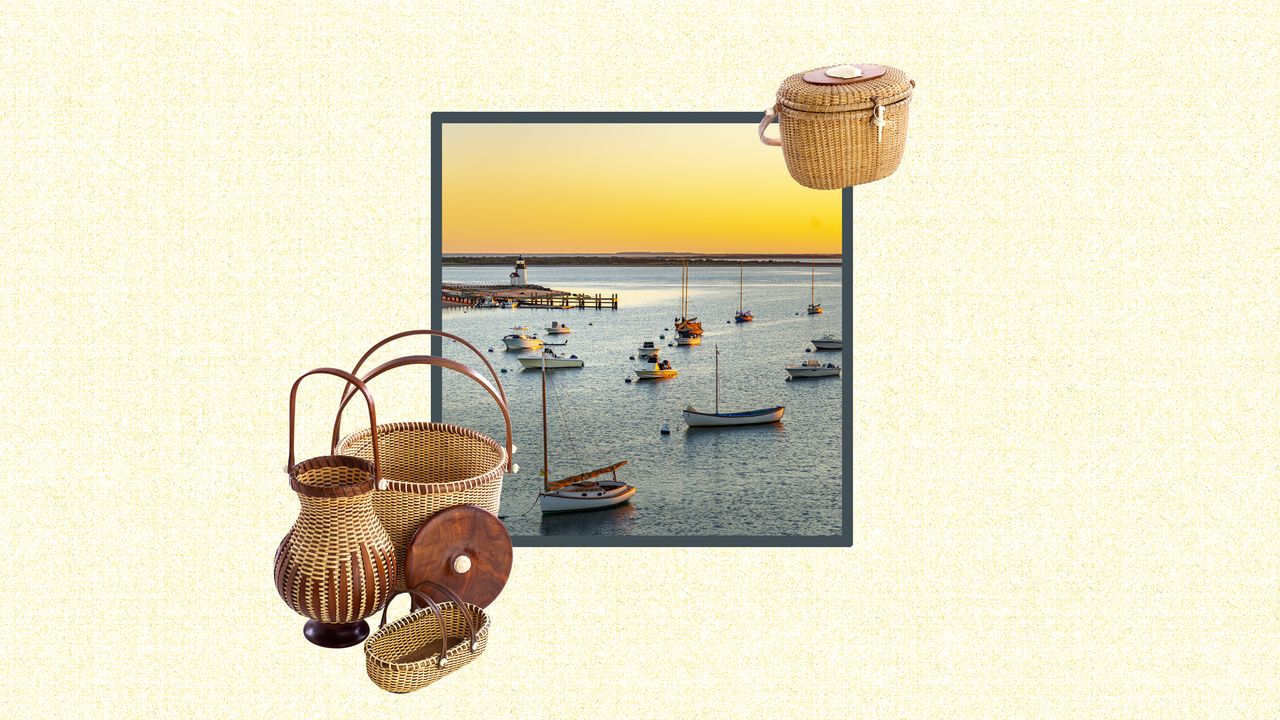
An authentic Nantucket Lightship basket is a masterpiece of New England summer fashion, defined by its unique construction over a wooden mold using rattan staves and cane. Originally serving as utilitarian containers, these baskets achieved legendary status as the ultimate ‘It’ bag when Jose Formoso Reyes added a lid and handle in 1948, creating the iconic friendship basket that remains a coveted heirloom today.
The Evolution of a Status Symbol: From Whaling Ships to Main Street
To understand the allure of the Nantucket Lightship basket, one must first appreciate the salt-sprayed history of the South Shoal Lightship. In the mid-19th century, men were stationed on these floating lighthouses for months at a time to protect ships navigating the treacherous waters off Nantucket. To pass the solitary hours, these sailors turned to basketry, refining a craft that had roots in the local whaling industry history.
Unlike the splint baskets found elsewhere in New England, these maritime creations were woven around solid wooden molds, a technique that ensured uniform shape and incredible durability. The Nantucket Historical Association notes that what began as a way to alleviate boredom eventually became a sophisticated trade. These early utilitarian baskets were designed to carry everything from groceries to coal, yet they possessed a structural elegance that foreshadowed their future as investment-grade accessories.
As the whaling era waned and Nantucket transitioned into a premier summer destination, the demand for these baskets shifted. They were no longer just tools for the working man; they were becoming symbols of a refined, coastal lifestyle. The transition from the sea to the cobblestone streets of Main Street marked the beginning of the basket’s journey as a high-status item. Today, vintage pieces from this era are highly sought after by collectors who value the deep patina of aged wood and the history of the men who wove them under the beam of the lightship.
The 1948 Revolution: José Formoso Reyes and the ‘Friendship Basket’
The most significant turning point in the history of the Nantucket Lightship basket occurred in 1948. This was the year that José Formoso Reyes, a talented weaver originally from the Philippines, moved to the island and forever changed the trajectory of the craft. Before Reyes, the lightship basket was an open-top container. Reyes had the visionary idea to add a swinging handle and a hinged lid, effectively turning a basket into a handbag.
These new designs became known as antique Nantucket friendship baskets. They were often gifted as tokens of affection or passed down through generations of island families. To elevate the aesthetic further, Reyes collaborated with gifted craftsmen to incorporate scrimshaw artistry onto the lids. These decorative carvings—often featuring whales, scallop shells, or the island’s outline—were crafted from ivory or high-quality synthetics, adding a layer of narrative and luxury to the piece.
Through the Four Winds Craft Guild, José Formoso Reyes baskets became a staple of the summer uniform for the American elite. The elegance of his work lies in the tension between the rugged materials and the delicate execution. For those interested in authenticating José Formoso Reyes Nantucket baskets, it is essential to look for the signature inscription on the base: "Made in Nantucket, Jose Formoso Reyes." Owning one is not merely about having a purse; it is about possessing a piece of New England heritage. Today, collectors often seek contemporary Nantucket Lightship basket clutch recommendations that mimic the timeless proportions Reyes established over seventy years ago.
Anatomy of an Icon: Identifying Authentic Nantucket Baskets
For the discerning collector, identifying authentic Nantucket baskets requires a keen eye for detail and a tactile understanding of the materials. An authentic basket is never "free-woven"; it is always shaped over a specific wooden mold, which gives the piece its structural integrity and perfectly symmetrical silhouette.
The sensory experience of a genuine basket is unmistakable. There is the faint, grassy scent of the cane and the smooth, cool touch of the hand-carved ivory or mahogany lid ornaments. When you run your fingers over the weave, the rattan staves and cane should feel tight and uniform, a testament to the fact that an average 8-inch basket demands at least 40 hours of labor.
| Feature | Authentic Nantucket Lightship Basket | Mass-Produced Imitation |
|---|---|---|
| Base | Solid wooden bases, usually oak, cherry, or mahogany. | Plywood or plastic-coated materials. |
| Staves | Hand-cut rattan staves that taper toward the rim. | Uniform, machine-cut bamboo or plastic. |
| Weaving | Exceptionally tight cane weavers with no visible gaps. | Loose weaving or staples used for attachment. |
| Lid | Hinged with precision; often features a carved plaque. | Glued-on ornaments or flimsy hinges. |
| Signatures | Hand-signed or stamped by the maker on the bottom. | No signature or generic "Made in China" labels. |
When identifying authentic Nantucket baskets by maker signature, look for names like Paul Whitten, William Appleton, or the legendary Reyes. The signature is often accompanied by a small map of the island or a specific date, providing a clear path to establishing the heirloom provenance of the piece.
The Collector’s Guide: Determining Value and Style
Investing in a Nantucket Lightship basket is a journey into the world of fine craft. Several factors that determine Nantucket Lightship basket value include the reputation of the weaver, the age of the piece, and the complexity of the decorative carvings. While a basic open basket might serve as a beautiful home accent, the lidded handbags are where the market truly thrives.
In 1948, Jose Formoso Reyes introduced the first lidded Nantucket lightship basket designed specifically as a purse, and the market has only climbed since. For those seeking vintage Nantucket friendship baskets buying advice, condition is paramount. Look for any "checkered" or broken weavers, as these can be costly to repair and significantly detract from the value. The patina of the cane should be even; a rich, honey-gold color usually indicates a well-cared-for antique.
Choosing decorative carvings for Nantucket basket lids is perhaps the most personal part of the process. While a classic whale is always in style, more rare motifs like a detailed scallop shell or a spray of wild roses can increase the rarity of the bag. These carvings were traditionally done in ivory, though modern weavers use alternative materials like fossilized mammoth ivory or high-grade resin to maintain the aesthetic while respecting current conservation laws. Because these are handmade, no two baskets are ever truly identical, making every purchase a unique addition to your wardrobe.
FAQ
What is special about a Nantucket Lightship basket?
What sets the Nantucket Lightship basket apart is its unique origin as a maritime craft and its rigorous construction method. Unlike other baskets, it is woven around a solid mold with a wooden base, making it incredibly sturdy and perfectly symmetrical. Its transformation from a sailor's tool to a luxury fashion icon—often referred to as the Nantucket Birkin—gives it a cultural prestige that few other accessories can claim.
How can you tell if a Nantucket basket is authentic?
Authenticity is confirmed by several key markers: the use of a wooden mold in the shaping process, the presence of rattan staves and cane, and a solid wooden base. Most importantly, authentic baskets are typically signed or inscribed on the bottom by the artisan. High-quality craftsmanship will show exceptionally tight weaving and fine materials like cherry or oak for the base and rims.
Why are Nantucket Lightship baskets so expensive?
The price reflects the immense time and skill required for their creation. A single bag takes between 40 and 60 hours to weave by hand. Furthermore, they are produced in very limited quantities by specialized artisans. The investment value is also driven by their history and status as a multi-generational heirloom; a nested set once sold at auction for a record-breaking $118,000.
Who originally made Nantucket Lightship baskets?
The craft was pioneered by the crew members of the South Shoal Lightship in the mid-19th century as a way to pass time during their long shifts at sea. Later, in the 20th century, master weavers like Jose Formoso Reyes, Paul Whitten, and William Appleton refined the design, with Reyes being credited for the pivotal invention of the lidded handbag version in 1948.
Are Nantucket baskets still made today?
Yes, a dedicated community of weavers on Nantucket and throughout New England continues to produce these baskets using the traditional methods. Modern artisans often study under masters or through the Nantucket Historical Association to ensure the techniques are preserved. While contemporary versions are available, they remain high-status, luxury items due to the manual labor involved.
Discover Your Own Piece of Nantucket History
In an era of fast fashion and fleeting trends, the Nantucket Lightship basket stands as a defiant symbol of slow luxury. It is a piece that demands patience—both from the weaver who spends weeks at the bench and the collector who may wait months for a custom commission. Its enduring appeal lies in its ability to be both a rugged piece of history and a refined accessory that looks just as at home at a garden party as it does on the deck of a sailboat.
Whether you are scouring an antique shop for a vintage Reyes or commissioning a contemporary piece with a custom carving, you are participating in a tradition that spans nearly two centuries. The Nantucket Lightship basket is more than a bag; it is a tactile connection to the sea, a tribute to human patience, and a quintessential element of New England summer fashion that will never go out of style. As the cane darkens and the wood takes on the luster of age, your basket becomes a living record of your own travels and stories, ready to be passed down to the next generation of romantics.