Bangkok is a city of layers, a place where the scent of jasmine garlands and diesel fumes mingle in the humid air, and the hum of a thousand tuk-tuks provides the rhythm of the streets. It is a metropolis that refuses to sit still, constantly reinventing itself while keeping its gilded history within arms reach. In my years covering the pulse of Asia’s culinary and cultural heart, I have found that the city’s true magic lies in the friction between the old and the new. Whether you are navigating the intricate alleys of a centuries-old market or sipping a cocktail fifty stories above the pavement, the city offers an intensity that is unmatched.
In 2024, the city reached a new milestone as it was ranked as the world's most visited city, welcoming a record-breaking 32.4 million international visitors. This influx of energy has fueled a sophisticated evolution in the city's infrastructure and offerings, from sprawling urban parks to refined dining rooms that are redefining the global perception of Thai flavors.
Quick Facts
- Recommended Stay: 3–5 days for a complete experience.
- Best Entry Time: 8:30 AM for Royal landmarks to beat the heat and crowds.
- Must-Have Apps: Grab and Bolt for reliable transport and food delivery.
- Budget Marker: Wat Arun entry is 500 THB; street food meals generally range from 50-100 THB.
- 2026 Highlight: The 120-acre urban expansion and final phase of Benchakitti Park.
- Cultural Note: Always carry a scarf or sarong; shoulders and knees must be covered in all temples.
The best things to do in Bangkok include exploring cultural landmarks such as the Grand Palace and Wat Arun, sampling world-class street food in Chinatown, and shopping at the expansive Chatuchak Weekend Market. For a modern perspective, visit the skyline skywalks and luxury malls of Sukhumvit to witness the city's architectural evolution.
1. Explore Cultural Icons: The Grand Palace and Wat Pho
There is no better way to begin a Bangkok sightseeing guide than at the spiritual heart of the city. The Grand Palace is not merely a monument; it is a complex tapestry of Siamese history. In my experience, arriving at 8:30 AM sharp is the only way to see the palace comfortably before the tropical sun becomes unforgiving. As you walk through the gates, the sheer scale of the gold-leafed stupas and vibrant mosaic tiling is breathtaking.
The centerpiece of the grounds is the Temple of the Emerald Buddha, which houses the most sacred Emerald Buddha statue in Thailand. Carved from a single block of jade, the statue’s seasonal robes are changed only by the King. The Grand Palace remains one of Bangkok's premier landmarks, attracting approximately 8 million visitors annually. After marveling at the ancient temple murals, make your way to the Queen Sirikit Museum of Textiles on the palace grounds to see how royal fashion has preserved Thai silk traditions.
Just a short walk away lies Wat Pho, the Temple of the Reclining Buddha. The sight of the 150-foot reclining Buddha, plated in gold with mother-of-pearl inlay on the soles of its feet, never fails to inspire a sense of quiet awe. Beyond the statue, Wat Pho is the national center for traditional Thai massage. If your feet are weary from our Grand Palace and Wat Pho one day itinerary, I highly recommend booking a thirty-minute session here; the technique is firm, ancient, and entirely revitalizing.
2. Cross the River for Wat Arun's Views
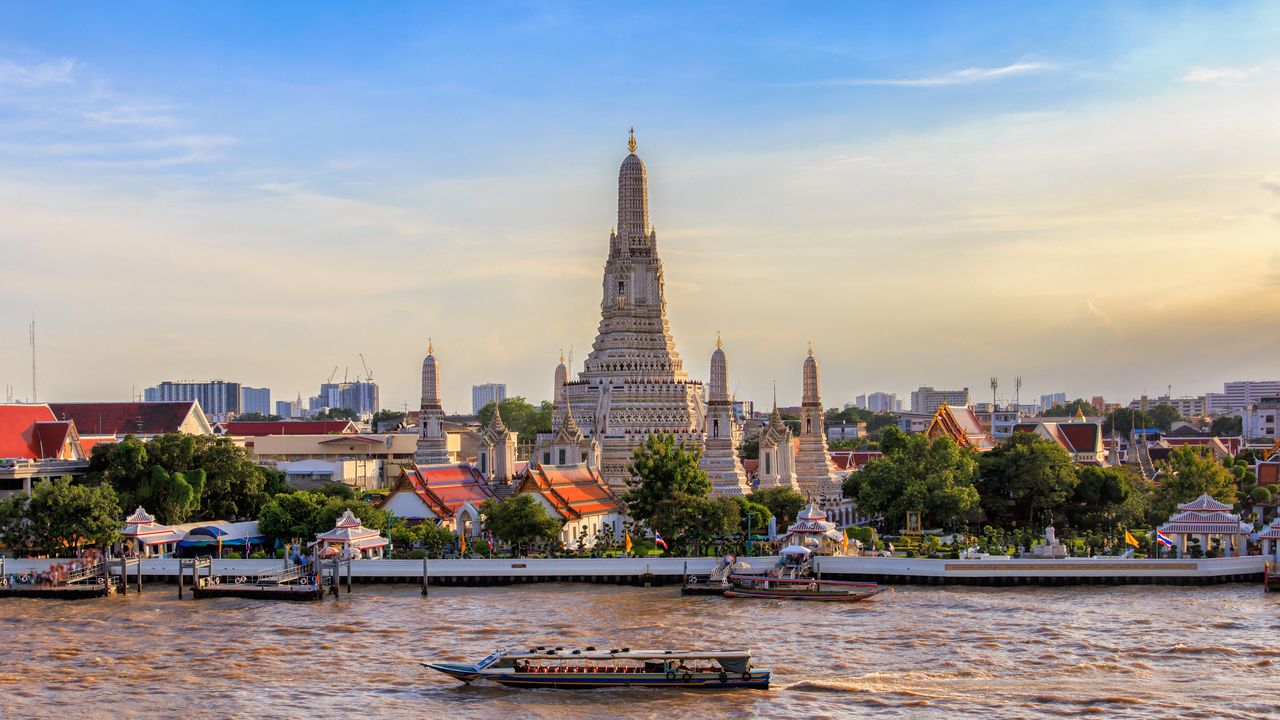
To reach the Temple of Dawn, or Wat Arun, you must cross the Chao Phraya River. I always prefer taking the local Chao Phraya water taxis; for only a few THB, you can witness the city’s life from the water, passing barges laden with sand and longtail boats with roarous engines.
Wat Arun is distinguished by its towering, Khmer-style architecture. The central prang is encrusted with bits of porcelain and seashells, which shimmer iridescently in the light. While many visit in the morning, I find it to be one of the best views in Bangkok as the sun begins to set. The temple is illuminated at night, turning the porcelain spire into a golden beacon against the dark water. Climbing the steep steps of the central tower provides a panoramic perspective of the river and the historic Thonburi side of the city.
3. Feast Through Chinatown (Yaowarat)
As the sun dips below the horizon, the neon lights of Yaowarat Road flicker to life, signaling the start of a nightly ritual. Bangkok’s Chinatown is a sensory explosion. The air smells of charred seafood, sweet ginger, and roasted chestnuts. Navigating this district requires a guide to browsing Bangkok Chinatown street food stalls, as the sheer volume of options can be overwhelming.
Seek out the stalls that have earned a nod from the Michelin guide. You might find yourself standing in a long queue for Thai-Chinese street snacks like crispy oyster omelets or the famous rolled rice noodles in a peppery broth at Guay Jub Ouan Pochana. There is a primitive joy in eating on a plastic stool at a folding table while the city’s traffic rushes past just inches away. Do not leave without trying the toasted buns filled with oozing chocolate or pandan custard—a Yaowarat staple that captures the city’s love for indulgence.
4. Experience High-End Flavor at Sorn
In contrast to the gritty charm of Chinatown’s alleys, Bangkok’s fine dining scene has reached new heights of sophistication. Sorn, a three-Michelin-star establishment, offers a masterclass in Southern Thai cuisine. Securing a table here is a feat in itself, often requiring bookings months in advance, but the experience is a profound journey through the flavors of Thailand’s southern provinces.
The chefs at Sorn utilize traditional techniques—charcoal cooking, clay-pot rice, and hand-squeezed coconut milk—to elevate humble ingredients into art. Each dish tells a story of the sea, the jungle, and the spice trade. It is a reminder that while street food is the soul of the city, the refined palates of its chefs are pushing the boundaries of what Thai food can be on the world stage.
5. Shop the Legendary Chatuchak Weekend Market
If you find yourself in the city over a Saturday or Sunday, a pilgrimage to Chatuchak Weekend Market is essential. This is a shopping experience of gargantuan proportions, with over 15,000 stalls divided into distinct sections. Chatuchak Weekend Market, a major shopping and food destination, draws an estimated 200,000 visitors every weekend.
Navigating the market requires patience and a strategy. My tips for shopping at Chatuchak Weekend Market are simple: go early (around 9:00 AM), stay hydrated, and embrace the bargaining culture. While the market is famous for everything from home decor to exotic pets, the sections dedicated to local fashion and antiques are where the real treasures reside. You can find independent Thai designers selling linen pieces that would cost quadruple the price in a Sukhumvit boutique.
| Shopping Destination | Best For | Vibe |
|---|---|---|
| Chatuchak Market | Antiques, local fashion, handicrafts | Raw, bustling, traditional |
| Central Park Mall | Luxury brands, designer labels | Hyper-modern, air-conditioned |
| Yaowarat (Chinatown) | Dried spices, tea, street snacks | Gritty, neon-lit, historic |
| Talat Noi | Art prints, vintage finds | Artistic, hidden, quiet |
6. Discover the Modern Skyline: Emsphere and Central Park Mall
The Bangkok of 2026 is defined by its vertical growth and futuristic retail spaces. The recently opened Emsphere in the Phrom Phong district is a testament to this, blending industrial design with high-end nightlife and international dining. It is a vivid contrast to the traditional teak houses found in the older quarters of the city.
For a true taste of the city’s future, head to the new Central Park mall. This isn't just a place for luxury shopping at Central Park Bangkok mall; it is a multi-functional space that integrates urban green spaces into the retail experience. The mall features a massive urban sky park, allowing visitors to transition from high-end boutiques to a lush, landscaped rooftop with views of the bustling Rama IV road below.
7. Walk Above the City at Benchakitti Park
Finding a moment of serenity in Bangkok can be a challenge, but the recent expansion of Benchakitti Park has provided a much-needed sanctuary. The park now encompasses over 120 acres of reclaimed land, featuring wetlands and thousands of native trees.
The highlight for any visitor is walking the Benchakitti Park skywalk for skyline views. This 1.2-mile elevated walkway meanders through the park, offering a peaceful vantage point of the Sukhumvit towers reflecting in the park’s central lake. It is particularly striking during the "golden hour" just before sunset, when the modern skyline is bathed in a soft, orange glow. This area has quickly become one of the premier photography spots for those looking to capture the duality of Bangkok’s nature and concrete.
8. Savor Sundowners at Octave Rooftop Bar
While the city has many famous sky bars, Octave Rooftop Bar at the Marriott Hotel Sukhumvit remains my personal favorite for skyline sundowners. Unlike some of its more crowded counterparts, Octave offers a 360-degree view of the city from its 49th-floor lounge. There is no better place to watch the city’s Sukhumvit district nightlife begin to sparkle.
As you sip a cocktail infused with local ginger or lemongrass, you can see the endless trail of red taillights stretching toward the horizon. It is a moment to appreciate the sheer scale of this metropolis. For the best experience, I suggest arriving by 5:30 PM to secure a seat at the edge of the terrace as the sun begins its descent.
9. Wander the Creative District of Talat Noi
Talat Noi is perhaps one of the city's most evocative neighborhoods. Tucked between Chinatown and the river, this historic community is a maze of narrow alleys where old engine parts are piled high outside mechanic shops and traditional teak houses stand next to contemporary art foundations.
The area has undergone a creative renaissance in recent years. You will find vibrant street art tucked behind crumbling walls and hidden cafes overlooking the river. For those seeking photography spots in Talat Noi Bangkok, keep an eye out for the iconic abandoned orange car overgrown with vines or the So Heng Tai Mansion, a 200-year-old Chinese courtyard house that now serves as a diving school and cafe. Nearby, the Soi Nana cocktail scene (not to be confused with the Sukhumvit red-light district) offers some of the most inventive bars in the city, like Tep Bar, which focuses on Thai herbal spirits and traditional music.
10. Take a Sunset Chao Phraya River Cruise
To round out your journey, a river experience is essential. While the public water taxis are great for transit, a luxury sunset cruise offers a different perspective of the city's heritage. Many travelers wonder about the best Chao Phraya river dinner cruises for couples, and my recommendation is always to opt for one of the smaller, refurbished antique rice barges. These offer a more intimate atmosphere compared to the large, neon-lit party boats.
As you drift past the illuminated facade of the Grand Palace and the glowing spire of Wat Arun, the city’s history seems to crystallize. The reflection of the ancient temples on the water, contrasted with the shimmering glass of the Iconsiam mall, perfectly encapsulates the spirit of Bangkok. It is a city that respects its ancestors while racing toward a bright, neon-lit future.
FAQ
How many days should I stay in Bangkok?
I recommend a stay of 3 to 5 days. This allows you enough time to explore the major historical sites like the Grand Palace, spend a full evening in Chinatown, indulge in a shopping spree at the malls or markets, and still have time for a day trip to the ancient capital of Ayutthaya or the Maeklong Railway Market.
What are the must-see attractions in Bangkok?
The absolute essentials include the Grand Palace and the Temple of the Emerald Buddha, the Reclining Buddha at Wat Pho, and the riverside beauty of Wat Arun. Beyond the temples, a visit to the Chatuchak Weekend Market and a walk through the Yaowarat Chinatown district are vital for understanding the city's culture and culinary soul.
What is the best month to visit Bangkok?
The most pleasant time to visit is during the cool and dry season from November to February. During these months, the humidity is lower and the temperatures are more manageable for walking between sites. However, if you don't mind the heat, many travelers enjoy visiting in April for Songkran, the Thai New Year water festival.
What is the best area to stay in Bangkok?
For first-time visitors, the Riverside area offers luxury and easy access to the temples via water taxis. Sukhumvit is ideal for those who want to be in the center of the shopping, dining, and nightlife scene with easy access to the Skytrain. For a more historic and local feel, look for boutique hotels in the Old City or near Talat Noi.
Are there many free things to do in Bangkok?
Yes, Bangkok offers many experiences that cost nothing. You can wander through the vibrant flower market (Pak Khlong Talat) at midnight, explore the street art and historic alleys of Talat Noi, or enjoy the lush expanses and skyline views from Benchakitti Park and Lumphini Park without spending a single baht. Walking through the opulent malls like Siam Paragon or ICONSIAM is also a free way to experience the city's modern grandeur.