Quick Facts
- The Golden Rule: Every interaction, from a newsstand to a luxury boutique, must begin with a greeting.
- Greeting Switch: Use Bonjour during the daylight hours and switch to Bonsoir precisely at 6 PM.
- English Proficiency: In 2026, while approximately 57% of the population possesses at least basic English proficiency, cultural protocol still requires a French opening.
- Service Standards: Dining and retail staff in major cities like Paris, Nice, and Marseille are generally polyglots but expect customers to acknowledge local formalities first.
- 2026 Requirements: Travelers from the US and Canada must have an ETIAS authorization for entry by Q4 2026.
- Mandatory Manners: Ignoring a shopkeeper when entering a store is considered a significant breach of France travel etiquette.
- Table Manners: Keep both hands visible on the table at all times, and always ask for une carafe d’eau if you prefer free tap water.
While English is widely spoken in major French cities like Paris, Nice, and Marseille, beginning a conversation immediately in English can be perceived as impolite. Proper France travel etiquette dictates that you should always initiate contact with a friendly Bonjour during the day or Bonsoir after 6 PM. Once you have established this polite baseline, most locals in the hospitality sector are happy to switch to English to assist you.
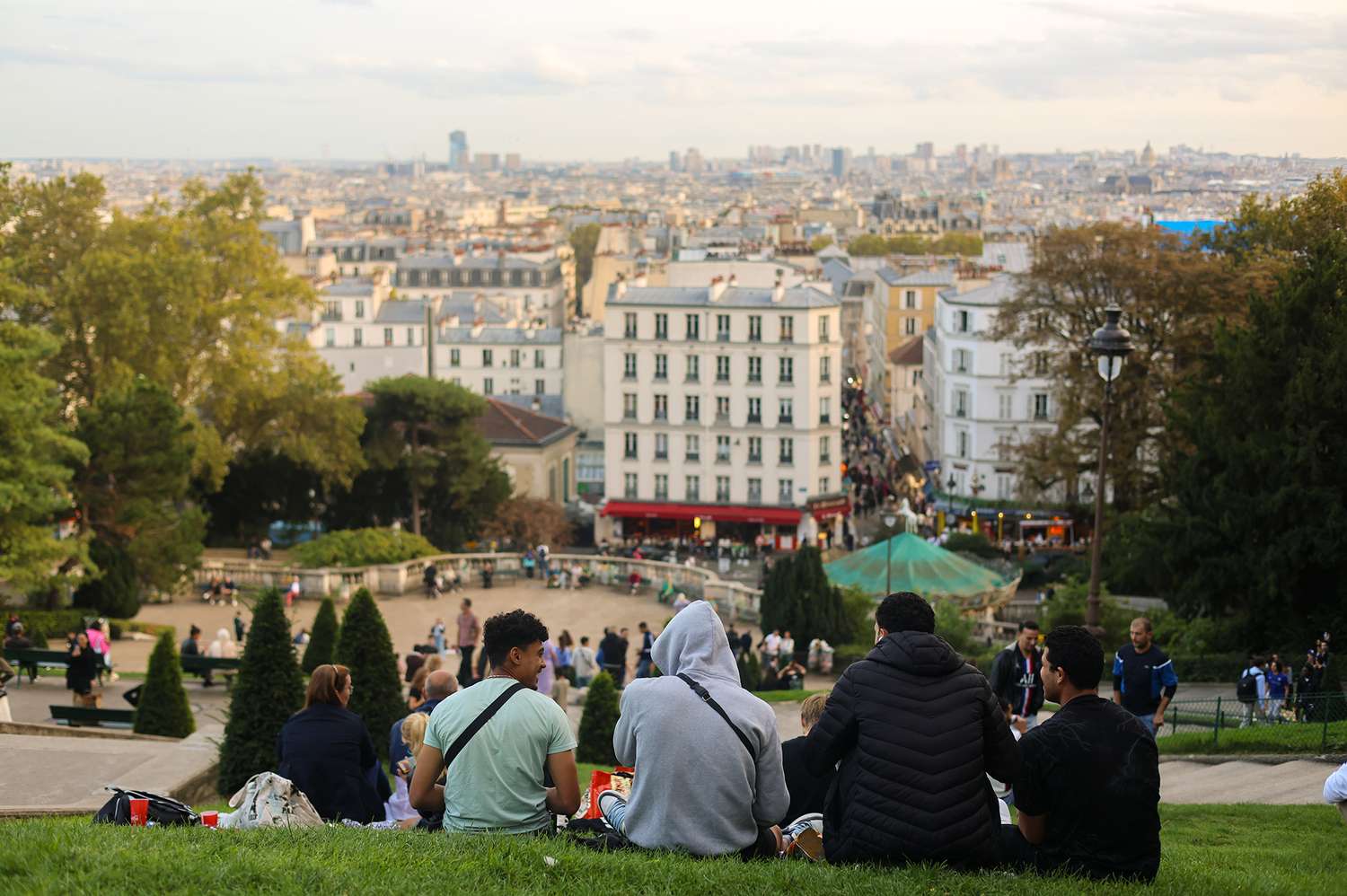
There is a recurring myth that haunts the dreams of many first-time travelers: the image of the scowling Parisian waiter who refuses to acknowledge a request made in English. As someone who has spent a decade moving through the honey-colored streets of the Marais and the lavender fields of Provence, I can tell you that this stereotype is largely a misunderstanding of a deeply rooted social contract.
In France, language is not just a tool for communication; it is a gesture of respect. Navigating France without speaking fluent french is entirely possible, provided you understand that the initial few seconds of any interaction are the most critical. It is not your lack of vocabulary that causes friction, but rather a perceived lack of effort toward basic French social etiquette.
The Bonjour Mandate: The First 10 Seconds
Imagine walking into a friend’s living room and immediately asking, "Where is the bathroom?" without saying hello. In the French view, every bakery, cheese shop, and hotel lobby is essentially someone’s home. The Bonjour Mandate is the non-negotiable requirement to acknowledge the other person’s humanity before making a request.
When exploring essential French greetings for travelers, remember that Bonjour is more than a hello; it is a password that opens doors. This tradition is so ingrained that ignoring a shopkeeper as you enter a boutique is seen as an active snub. Whether you are buying a 2-Euro baguette or a 2,000-Euro handbag, the script is the same. You cross the threshold, catch the eye of the proprietor, and offer a soft, clear Bonjour.
One of the most common french etiquette mistakes for travelers is forgetting the temporal shift. At exactly 6 PM, Bonjour retires for the evening and Bonsoir takes its place. Using the morning greeting after dusk feels slightly jarring to local ears, like wearing sunglasses at midnight. By mastering how to use basic french greetings for travel, you signal that you are a visitor who values the local culture, which almost instantly softens any cultural friction.
2026 Alert: Starting in Q4 2026, the ETIAS travel authorization becomes mandatory for most non-EU visitors. Ensure your digital paperwork is processed at least 96 hours before your flight to avoid issues at the border.
Myth-Busting: English in France 2026
There is a lingering anxiety about whether it is rude to speak english in france. To ease your mind, consider the modern reality. Following the global spotlight of the 2024 Olympics and the continued surge in international tourism, the hospitality gap has narrowed significantly. In major tourist hubs, communicating in English in France is the norm for professional interactions.
However, the statistical landscape paints an interesting picture. According to a study by the IFOP, only approximately 28% of French citizens report being able to speak and understand English fluently. Despite that, wider estimates suggest that about 57% of the population has at least basic proficiency. This means that while your waiter or hotel clerk likely speaks English, the elderly woman at the local market or the bus driver in a rural village might not.
Furthermore, the French government is reinforcing the importance of its mother tongue. Beginning in 2026, new residency rules will require applicants for multi-year residence permits to demonstrate at least A2-level French proficiency. This underscores the prestige of the language, which is currently the fifth most spoken language globally and the third most used language in international business.
For the traveler, the takeaway is simple: English is a practical tool, but French is the key to local hearts.
Essential Survival Phrases & Social Toggles
You do not need to conjugate irregular verbs to have a wonderful time in Lyon or Bordeaux. Instead, you need "social toggles"—phrases that allow you to pivot gracefully from the required French opening to a language where you feel more comfortable.
The single most important sentence in your arsenal is: Je ne parle pas français. Parlez-vous anglais? (I don't speak French. Do you speak English?). By saying this, you have fulfilled your side of the social contract. You attempted the language, admitted your limitation, and asked for help respectfully.
Another nuance of French social etiquette is the distinction between vous (formal) and tu (informal). As a traveler, you should exclusively use vous. The informal tu is reserved for children, close friends, and family. Using tu with a waiter is a faux pas that can make an interaction feel uncomfortably intimate or patronizing.
Essential Greeting Matrix
| Situation | Phrase | Phonetic Pronunciation |
|---|---|---|
| Daytime Greeting | Bonjour | bohn-zhoor |
| Evening (After 6 PM) | Bonsoir | bohn-swahr |
| Please | S’il vous plaît | seel voo play |
| Thank You | Merci | mair-see |
| Goodbye | Au revoir | oh ruh-vwahr |
| Do you speak English? | Parlez-vous anglais? | par-lay voo ong-glay |
Shopping and Dining: The Etiquette of Service
Eating and shopping in France are considered art forms, and like any art, they have their own rules. When focusing on france travel etiquette for shopping and dining, the most important thing to understand is the pace of service.
In a restaurant, the table is your territory for the duration of the meal. A waiter will almost never bring the check (l’addition) unless you specifically ask for it. This isn't poor service; it is a sign of respect for your leisure. When you are ready to leave, catch the server's eye and say, l’addition, s’il vous plaît.
At the Table
- Hands on Display: In France, your hands should always be on the table, not in your lap. Keep your elbows off the table, but keep your wrists visible.
- The Bread Basket: Bread is a tool for the meal, not an appetizer. It is often placed directly on the tablecloth rather than a side plate. Avoid eating all the bread before the first course arrives.
- Water Wisdom: You don't have to buy expensive bottled water. Ask for une carafe d’eau for a pitcher of perfectly fine (and free) tap water.
In the Boutique
Retail interactions are highly structured. When you enter, the Bonjour is mandatory. If you are just browsing, say Je regarde seulement, merci. This lets the shopkeeper know you don't need immediate assistance. When you leave, even if you bought nothing, a polite Au revoir or Bonne journée (have a good day) is expected.
2026 Logistics: ETIAS, Transit, and Heatwaves
As we move toward the latter half of the decade, the logistics of travel are shifting. Beyond the cultural nuances of France travel etiquette, there are practical realities to manage.
For those visiting popular landmarks like the Louvre or the Musée d’Orsay, be aware of updated security protocols. Museum bag limits are increasingly strict, with many locations refusing entry to backpacks larger than 22x13x7 inches. Always check the specific museum’s website before you arrive.
Transportation within Paris is also evolving. The Paris Visite pass remains a staple, but more travelers are opting for digital Navigo Easy cards that can be topped up via smartphone. If you are traveling during the summer months, prepare for the heat. Despite modernization, less than 5% of private homes and many smaller boutique hotels in historic buildings do not have central air conditioning. Dressing in breathable linens and planning indoor activities for the midday sun is a survival tactic.
FAQ
Is it rude to speak English in France?
It is not inherently rude to speak English, but it is considered impolite to begin an interaction in English without first greeting the person in French. Starting with a simple Bonjour acts as a cultural bridge, after which most people are happy to communicate in English.
Do you have to say bonjour to everyone in France?
You do not need to say it to every person you pass on a busy street. However, you must say it to anyone you intend to interact with, including shopkeepers, waiters, hotel staff, and even when getting into a taxi.
Is tipping expected at restaurants in France?
Tipping is not mandatory because a service charge (service compris) is included in the bill by law. However, for exceptional service, it is common to leave a few small coins (1-2 Euros) or round up the bill. Significant tipping like in North America is not expected.
What is the proper way to greet people in France?
The standard greeting for strangers is a verbal Bonjour followed by a slight nod or eye contact. The physical greeting known as la bise (cheek kissing) is generally reserved for friends and family; for business or casual travel interactions, a polite verbal greeting or a handshake is sufficient.
How can I avoid being perceived as a rude tourist in France?
The best way to avoid this is to adhere to basic social formalities: always start with Bonjour, use s’il vous plaît and merci, keep your volume low in public spaces, and always wait for the server to bring the bill rather than waving them down aggressively.