Quick Facts
- Luxury Rebirth: The flagship Southern Ocean Lodge 2.0 has reopened, setting a global benchmark for resilient, high-end hospitality.
- Economic Investment: A massive $55 million has been invested into future-proofing the island’s tourism infrastructure following the 2020 bushfires.
- Eco-Innovation: Resorts now feature 100% off-grid potential via hybrid solar and battery systems and significant rainwater storage capacities.
- Regenerative Focus: The shift from sustainable to regenerative travel allows guests to participate in actual habitat restoration and wildlife data collection.
- Global Recognition: Kangaroo Island was ranked second in Lonely Planet's list of Top Regions to visit in 2024, specifically for its eco-tourism commitment.
- Conservation Strategy: Over 45,000 fire-retardant succulent plants have been strategically planted to form a green defensive shield around key luxury sites.
Kangaroo Island has entered a new era of travel. This Kangaroo Island eco luxury travel guide 2026 explores how the island's iconic lodges have rebuilt with resilience. Kangaroo Island eco luxury now combines high-end hospitality with environmental stewardship and regenerative travel, featuring off-grid retreats like Southern Ocean Lodge 2.0 that actively restore South Australia's endemic fauna through architectural innovation and community-led conservation partnerships.
Resilience by Design: Southern Ocean Lodge 2.0
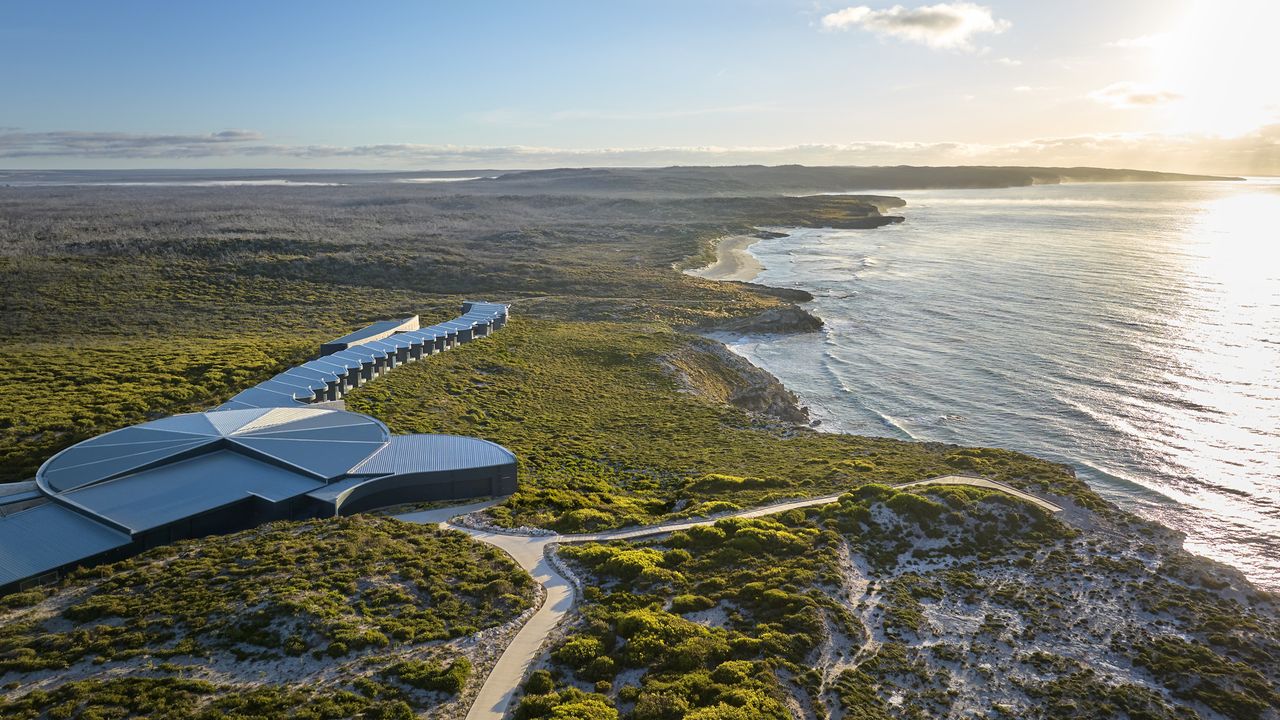
The story of Kangaroo Island eco luxury is inextricably linked to the phoenix-like rise of Southern Ocean Lodge. When the original lodge was lost to the 2020 bushfires, the architectural world mourned a masterpiece. However, the $55 million reconstruction led by original architect Max Pritchard has birthed Southern Ocean Lodge 2.0—a structure that doesn’t just sit on the landscape but exists in a protective dialogue with it. The architectural resilience of the new build is evident in its slightly adjusted footprint, designed to better integrate with the dramatic coastal limestone cliffs while maintaining the legendary "view from the end of the world."
The new design philosophy, which I call Sustainable Luxury 2.0, moves beyond aesthetics into the realm of survival and stewardship. The lodge now features a fire-proof bio-shield, where 45,000 fire-retardant plants provide a lush, green defensive buffer against future climate events. Inside, the luxury is grounded in regionalism. The provenance of every material is clear, with many furnishings sourced from South Australia artisans at the Jam Factory, ensuring that the economic impact of the rebuild supports the local creative ecosystem.
From a technical standpoint, the Southern Ocean Lodge sustainable design is a marvel of off-grid engineering. The facility is powered by a sophisticated hybrid solar and battery system, which significantly reduces its diesel fuel consumption by more than 50 percent. This system, combined with massive rainwater harvesting tanks capable of holding 1.5 million gallons, allows the lodge to operate with minimal environmental pressure on the island's resources.
| Sustainability Tech Spec | Southern Ocean Lodge 2.0 Detail |
|---|---|
| Energy System | Hybrid solar and battery storage (270kW solar array) |
| Water Management | 5.8 million litre (1.5m gal) rainwater storage |
| Thermal Regulation | High-performance glazing and improved southern-facing insulation |
| Eco-Shield | 45,000 succulent plants for fire-retardation |
| Renewable Impact | 50%+ reduction in diesel generator reliance |
Beyond Sustainability: Citizen Science & Regenerative Travel
In my years as an editor, I have seen the term "sustainability" become somewhat diluted. On Kangaroo Island, the narrative has shifted toward regenerative travel Kangaroo Island, a concept where the goal is not just to leave no trace, but to leave the destination better than you found it. This is embodied in the island’s embrace of citizen science.
The Passport 2 Recovery program is perhaps the most innovative example of this. This university-led initiative invites tourists to become active participants in the island’s recovery. Using a dedicated app, guests at luxury lodges can record sightings of endemic fauna, monitor the health of the disease-free Ligurian bees—the world’s last remaining pure strain—and track the regrowth of the iconic Yakka trees. This wildlife data collection is not merely a tourist activity; it provides critical biodiversity conservation data for scientists at the University of Adelaide and Flinders University.
Visitors find themselves deeply immersed in habitat restoration. Imagine spending your morning watching the sun rise over the Great Southern Ocean and your afternoon helping to monitor the recovery of the endangered Glossy Black Cockatoo. This nature-based immersion provides an emotional resonance that traditional luxury cannot match. By incentivizing conservation—where guests earn "points" for their local environmental stewardship—the island has created a circular economy that rewards those who care for the land.
Local Artisan Spotlight: The island’s commitment to provenance extends to the plate. Look for the "Kangaroo Island Produce" seal, which guarantees that your honey, spirits, and seafood support the local farmers and fishers who are the backbone of this regenerative travel Kangaroo Island movement.
Inland Sanctuary: Ecopia Retreat and Private Wilderness
While many are drawn to the rugged southern coast, the heart of the island offers a different, more intimate experience of Kangaroo Island eco luxury. Ecopia Retreat, located on a 150-acre private sanctuary, exemplifies the beauty of off-grid luxury within the island's interior. This is a place where environmental stewardship is built into the very walls—literally.
The retreat’s architecture utilizes solar-passive rammed earth walls, which provide natural thermal regulation, keeping the interiors cool during the Australian summer and warm in the winter without the need for energy-heavy HVAC systems. As an editor specializing in green accommodations, I find Ecopia’s focus on protecting the Glossy Black Cockatoo habitat particularly impressive. The retreat acts as a private wilderness corridor, allowing guests to witness wildlife in its most undisturbed state.
This is slow tourism at its finest. Away from the standard tourist routes, guests can enjoy nature-based immersion without the crowds. Whether it’s watching a mob of kangaroos graze at dusk or listening to the unique call of the cockatoos, Ecopia provides a logistical contrast to the coastal lodges, offering a deep-dive into the island’s inland biodiversity.
The Luxury Logistical Matrix: Planning Your 2026 Visit
Planning a trip to this part of South Australia requires a strategic approach to timing and itinerary. For the modern conscious traveler, the Kangaroo Island eco luxury travel guide 2026 recommends a stay of at least 3 to 5 days. This allows for a balance between visiting the iconic Flinders Chase National Park and engaging in private, low-impact tours.
- When to Visit: While the summer (December-February) is popular, I recommend the winter months (June-September). This is the prime time for viewing the Southern Lights (Aurora Australis) and witnessing the "Green Season," when the island's endemic fauna is most active and the landscapes are at their most vibrant.
- Logistics: Most high-end travelers arrive via a short flight from Adelaide or the SeaLink ferry. Once on the island, private guides are essential for high-end wildlife stalking and exclusive beach dining experiences that respect the local ecosystem.
- Regenerative Itinerary: Start with 2 nights of coastal immersion at Southern Ocean Lodge 2.0 to understand the scale of the island’s resilience. Follow this with 2 nights inland at Ecopia Retreat to support private sanctuary conservation.
- Regional Pairing: Consider a multi-region package that links the island with the sustainable wineries of the Barossa or the ancient landscapes of the Flinders Ranges to see the full scope of environmental stewardship in South Australia.
Kangaroo Island has successfully transitioned from a disaster-stricken region to a global leader in regenerative travel. By choosing these lodges and participating in Kangaroo Island citizen science programs, you aren't just a spectator of nature; you are a vital part of its rebirth.
FAQ
What is the best time of year to visit Kangaroo Island for a luxury stay?
The best time for a luxury stay is often considered the shoulder or cooler months from June to September. During this period, the island is lush and green, wildlife is highly active, and there is a significant chance to witness the Aurora Australis. Additionally, the lack of crowds during this season enhances the sense of exclusivity and nature-based immersion.
What are the most sustainable luxury accommodations on Kangaroo Island?
The two most prominent examples are Southern Ocean Lodge 2.0 and Ecopia Retreat. Southern Ocean Lodge is celebrated for its large-scale hybrid solar and battery systems and architectural resilience. Ecopia Retreat provides a more intimate off-grid luxury experience, utilizing solar-passive rammed earth design and maintaining a 150-acre private wildlife sanctuary.
What unique wildlife experiences are available at luxury lodges on Kangaroo Island?
Luxury lodges offer exclusive access to endemic fauna, including the Kangaroo Island kangaroo, tammar wallabies, and the endangered Glossy Black Cockatoo. Many lodges also facilitate partaking in Kangaroo Island citizen science programs, such as monitoring the world's last pure strain of Ligurian bees or participating in koala health surveys through the Passport 2 Recovery app.
Are there private guides for high-end tours on Kangaroo Island?
Yes, private guiding is a hallmark of the Kangaroo Island eco luxury experience. High-end tour operators provide expert naturalists who offer private wildlife stalking, gourmet beach dining, and access to private nature reserves that are not open to the general public, ensuring a personalized and low-impact adventure.
How many days do you need for a luxury trip to Kangaroo Island?
To truly appreciate the island’s regenerative travel Kangaroo Island initiatives and diverse landscapes, a minimum of 3 to 5 days is recommended. This allows for one full day dedicated to the wonders of Flinders Chase National Park, a day for private wildlife encounters or citizen science, and ample time to enjoy the slow tourism pace of the luxury retreats.