Quick Facts
- Best Nature Hub: Leeuwin-Naturaliste National Park, featuring rugged coastlines and ancient limestone.
- Core Hike: The Cape to Cape Track, a 135km journey through diverse maritime terroir and coastal heathland.
- Must-See Forest: Boranup Karri Forest, home to trees reaching up to 80 meters in height.
- Cultural Connection: Wadandi Boodja, reflecting over 65,000 years of human history and environmental stewardship.
- Best Coffee Spot: White Elephant Cafe at Gnarabup Beach for a quintessential coastal ritual.
- Conservation Note: The region is a global biodiversity hotspot with over 80 percent of the approximately 1,300 native plant species being endemic to the area.
- Visitor Impact: The region welcomes over 1.5 million overnight visitors annually, sustained by protected forests that cover 46 percent of the land.
Experience the soul of Margaret River nature, where the Indian Ocean coastline meets 80-meter Karri forests. This guide explores Wadandi Boodja through the lens of slow living, offering an immersive look at how the region's unique biodiversity and ancient geography shape a lifestyle defined by the rhythms of the land.
Sunrise at Gnarabup: The Ocean Ritual
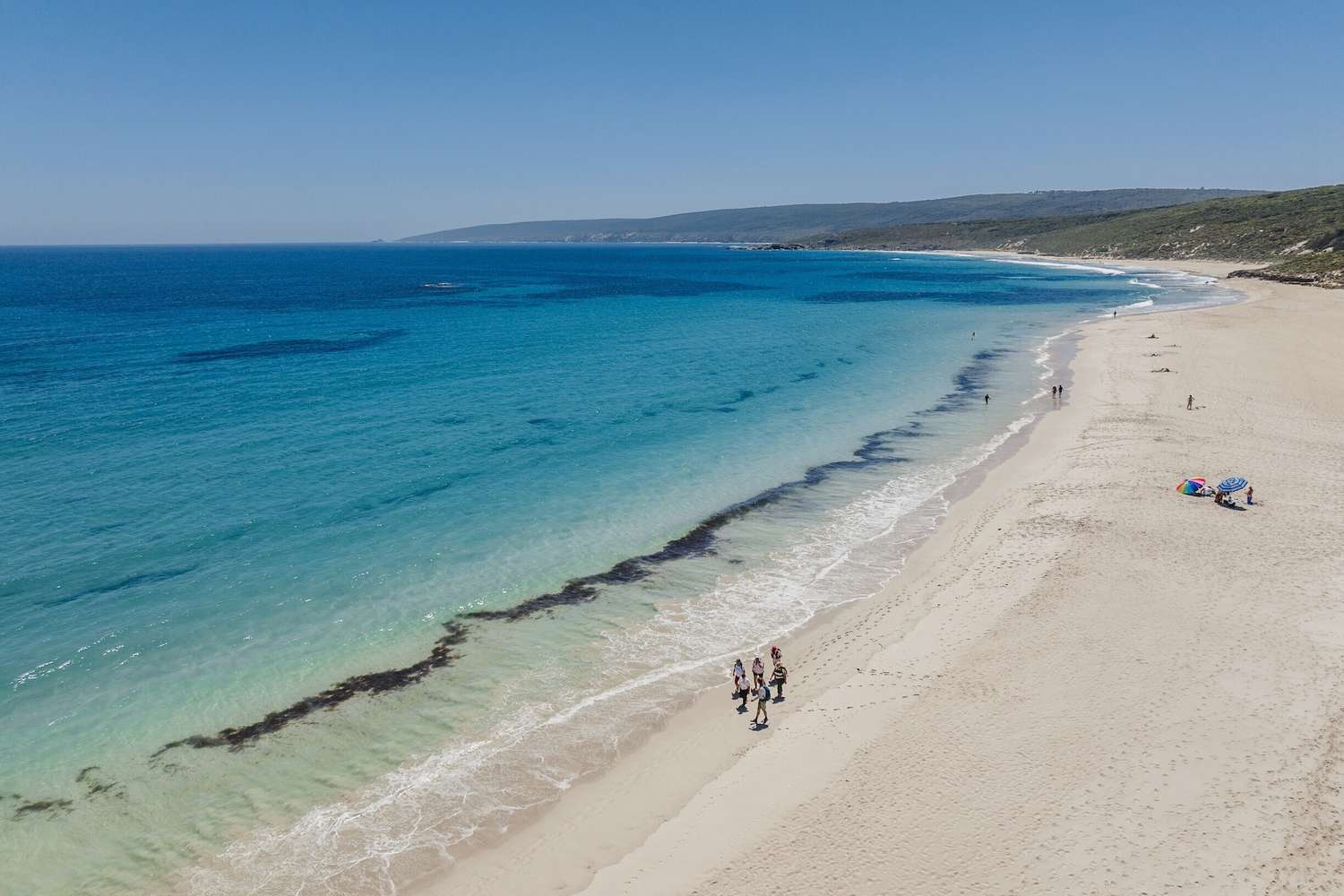
The morning in Margaret River does not begin with the buzz of an alarm, but with the rhythmic crash of the Indian Ocean coastline. For locals, the day starts at Gnarabup Beach. Here, the air carries a salt-heavy mist, and the ritual of slow living is practiced with a surfboard or a swim in the turquoise waters of the bay. There is a communal spirit at this hour, a shared understanding that the best way to honor Margaret River nature is to immerse oneself in it before the rest of the world wakes up.
Perched directly over the sand, the White Elephant Cafe serves as the social anchor for this morning ritual. It is the only beach-side cafe in the immediate area, offering a front-row seat to the shifting blues of the ocean. Whether you are grabbing a coffee after a session of surfing or simply sitting on the deck to watch the swell, the atmosphere reflects a deep-seated eco-conscious travel philosophy: move slowly, breathe deeply, and respect the water.
| Activity | Location | Best For |
|---|---|---|
| Swimming & SUP | Gnarabup Beach | Calm morning waters and family-friendly dips |
| Morning Coffee | White Elephant Cafe | Post-swim warming and local people-watching |
| Coastal Walk | Gnarabup to Surfers Point | Panoramic views of the rugged limestone cliffs |
For those looking for a Gnarabup Beach local guide for surfing and coffee, the secret is timing. Arrive just as the sun clears the ridge to see the ocean at its most tranquil. This is when the connection between the community and the environment is most palpable, illustrating why Margaret River slow living weekend itinerary ideas almost always begin with salt water and a shared brew.
Deep in the Karri: Forest Therapy in Boranup
Leaving the coast and heading inland, the landscape undergoes a dramatic transformation. The scrubby coastal heathland gives way to the Boranup Karri Forest, a place where the scale of Margaret River nature becomes truly humbling. The Karri trees here are among the tallest in the world, some reaching 80 meters. Their pale, smooth trunks rise like silver pillars from a floor of soft ferns, creating a Karri forest canopy that filters the sunlight into a soft, ethereal green.
Historically, the timber from this region was so highly prized for its strength that it was shipped across the globe, eventually finding its way into the construction of the London Underground. Today, the forest is a sanctuary for forest bathing and quiet reflection. The region remains a critical part of the Southwest Australia biodiversity hotspot, one of only 36 internationally recognized hotspots on the planet.
Insider Tip: When walking through Boranup, crush a fallen leaf of the peppermint trees that grow beneath the Karri. The sharp, refreshing scent is the olfactory signature of the South West bushland.
Activity Card: Boranup Forest Drive & Walk
- Location: Caves Road, south of Margaret River townsite.
- Best For: Forest therapy, photography, and birdwatching.
- Insider Tip: Take the unpaved Boranup Drive for a slower, more intimate experience of the towering canopy.
This forest is also a gateway to the region’s limestone cavern systems. Beneath the roots of these giant trees lies a hidden world of crystalline chambers and ancient fossils. For those seeking nature focused glamping Margaret River recommendations, several retreats are tucked into the edges of this forest, allowing travelers to sleep under the stars and wake to the chorus of kookaburras.
The Cape to Cape Track: A Nature-First Challenge
For the ultimate immersion into the Leeuwin-Naturaliste National Park, one must step onto the Cape to Cape Track. Spanning 135 kilometers between Cape Naturaliste and Cape Leeuwin, the track is a masterclass in geographic diversity. It winds through granite formations, over wind-swept bluffs, and down onto pristine white-sand beaches.
While the full thru-hike takes five to seven days, many visitors opt for Cape to Cape Track best sections for beginners. A standout is the 3.4-kilometer stretch from Sugarloaf Rock to Cape Naturaliste. This section is wheelchair accessible and offers dramatic views of the ocean carving through ancient rock. Another highlight is the Injidup Beach to Canal Rocks hiking route tips, where you can witness the raw power of the Indian Ocean as it surges through narrow granite channels.
The track is also the best vantage point for observing the seasonal whale migration. From June to December, Humpback and Southern Right whales can be spotted breaching just offshore. During the spring months, the track is lined with vibrant wildflower blooms, a testament to the region's resilience despite the fact that rainfall in the South West has declined by approximately 20 percent since the 1970s.
Activity Card: The Canal Rocks Scramble
- Location: End of Canal Rocks Road, Yallingup.
- Best For: Seeing the raw power of the ocean and unique geology.
- Insider Tip: Visit during a high swell to see the "canals" foam with a spectacular white spray.
Ancient Wisdom: Indigenous Land Experiences
To understand Margaret River nature is to understand Wadandi Boodja—the country of the Saltwater People. The Wadandi people have lived on this land for over 65,000 years, developing a sophisticated understanding of the environment that modern science is only beginning to quantify.
Engaging in Indigenous land experiences Margaret River provides a perspective that transcends standard tourist narratives. Knowledgeable Elders, such as Bill Webb, lead walks that reveal the bush as a pharmacy, a grocery store, and a spiritual home. They teach the "Six Seasons" of the Noongar calendar, which provides a far more accurate guide to the region's ecological cycles than the traditional four-season model. For instance, the season of Djilba (August-September) is the time of conception and burgeoning growth, marked by the flowering of yellow acacias and the birth of wildlife.
Indigenous nature tours Margaret River with Wadani Elders are not just educational; they are an exercise in sustainable viticulture and stewardship. They offer a blueprint for how we can enjoy the land today without compromising its health for future generations. This deep historical context adds a layer of reverence to every hike and every glass of wine enjoyed in the valley.
The Reward: Slow Living and Maritime Terroir
The "Grit and Glamour" of Margaret River is best experienced by pairing a morning of physical exertion with an afternoon of refined relaxation. After a day of Cape to Cape Track hiking, the slow living philosophy naturally leads toward the region's world-class wineries. However, in keeping with the nature-focused theme, look for estates that prioritize sustainable viticulture and a farm-to-table philosophy.
Vasse Felix, the region's founding wine estate, offers more than just a tasting room; it is an exploration of maritime terroir. The cool breezes from the Indian Ocean moderate the climate, allowing for the production of elegant Cabernet Sauvignon and Chardonnay. Enjoying a meal here, where the produce is sourced from the estate's own gardens and local foragers, is the culinary equivalent of forest bathing.
For those planning Margaret River slow living weekend itinerary ideas, the key is to avoid over-scheduling. Reserve time to simply sit at a lookout like Moses Rock or Wilyabrup Cliffs and watch the sunset. The best Margaret River wineries with a nature focus, such as Fraser Gallop or Cullen Wines, often have beautiful grounds designed to integrate with the surrounding bushland, encouraging guests to linger and enjoy the silence.
FAQ
What are the best nature spots in Margaret River?
Some of the most iconic spots include the Boranup Karri Forest for its towering trees, the Wilyabrup Cliffs for dramatic ocean views, and the various limestone caves like Lake Cave and Jewel Cave. Surfers Point at Prevelly is also a must-visit for watching the sun set over the Indian Ocean.
What wildlife can you see in the Margaret River region?
Visitors can frequently see Western Grey Kangaroos, particularly at dawn and dusk. The coastline is a prime spot for whale watching during the migration season. Birdwatchers should look out for Splendid Fairy-wrens and Red-tailed Black Cockatoos, while the forests are home to the endangered Western Ringtail Possum.
What are the best hiking trails in Margaret River?
The 135-kilometer Cape to Cape Track is the premier trail. For shorter walks, try the Meelup Trail along the sheltered Geographe Bay or the Rails to Trails track, which follows an old timber railway line from Margaret River to Cowaramup, winding through lush farmland and native forest.
When is the best time to see wildflowers in Margaret River?
The peak season for wildflower blooms is during the Noongar seasons of Djilba and Kambarang, which roughly align with August through November. During this time, the heathland and forest floors are covered in orchids, kangaroo paws, and banksias.
Which caves in Margaret River are best for nature lovers?
Lake Cave is spectacular for its "suspended table" formation and its serene underground lake. Jewel Cave is also highly recommended for its massive, ornate stalaktites and straw formations, while Ngilgi Cave offers a deep connection to Indigenous storytelling and history.